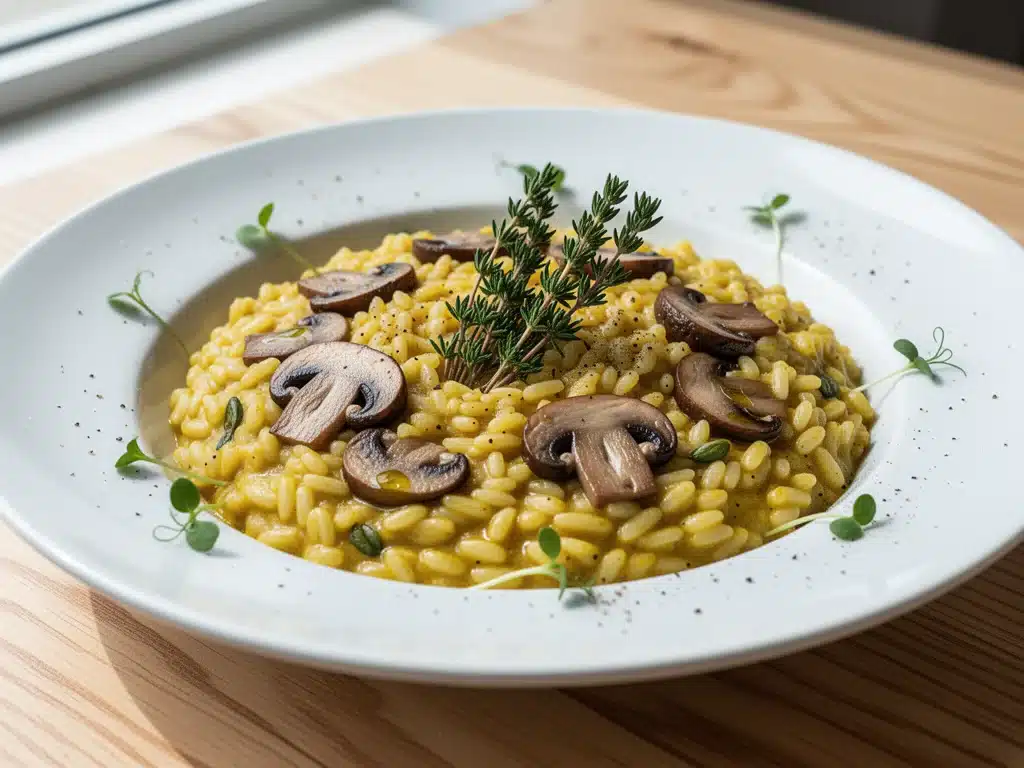
It’s 7:30 PM on a Tuesday. The kids are finally asleep, the dishes are done, and I am standing in my kitchen staring at a box of Arborio rice like it owes me money. I want something warm, something creamy, something that feels like a hug from the inside out. But I also want to watch the season finale of my favorite show without being chained to the stove for forty-five minutes, stirring like a maniac.
This is exactly why I fell in love with this vegan one-pot mushroom risotto. Real talk: traditional risotto is a commitment. It’s a labor of love that requires constant attention, a mountain of parmesan rinds, and enough butter to clog arteries if you eat it every day. And don’t get me started on the cleanup. That big pot? It usually ends up with a stuck-on cheese crust that requires soaking overnight.
But this method? This is the game-changer. I discovered it by accident during a rainy weekend when I was too lazy to wash three separate pans. I threw everything into one Dutch oven, added some extra vegetable broth, and let it simmer while I folded laundry. When I pulled the lid off, the rice was tender, the mushrooms were earthy and deep, and the sauce was creamy without a single drop of heavy cream or dairy.
I’ve made this vegan one-pot mushroom risotto at least a dozen times since then. Sometimes I add spinach. Sometimes I use wild mushrooms. Sometimes I just keep it simple with dried porcini for that intense umami punch. But the core technique remains the same: less stirring, less stress, and absolutely zero dairy, yet it tastes like it came from a high-end Italian restaurant. If you’ve been avoiding risotto because of the effort, or avoiding vegan comfort food because it usually tastes like cardboard, this is your sign to try it. It’s rich, it’s hearty, and it’s ready in the time it takes to finish a Netflix episode.
Why You’ll Love This Vegan One-Pot Mushroom Risotto
I know what you’re thinking. “Risotto? In one pot? Vegan?” It sounds too good to be true. But I’ve tested this recipe so many times that I can promise you it actually works. Here’s why this has replaced my usual pasta rotation:
- Zero Stirring Required — Seriously. Traditional risotto demands you stand there and stir for 20 minutes to release the starch. This method uses a higher liquid-to-rice ratio and a longer simmer time. You just set a timer and walk away. I’ve made this while helping my kid with homework. It’s that easy.
- Deep, Savory Flavor — Without butter and parmesan, you might think it would taste bland. It doesn’t. We use a combination of dried porcini mushrooms (the ones that come in little packets) and a splash of soy sauce or tamari. The soy sauce doesn’t make it taste like Asian food; it just adds that savory depth that parmesan usually provides. It’s a secret weapon.
- One Pot Cleanup — This is the biggest selling point for me. One pot. One lid. Done. No separate pan for sautéing mushrooms, no separate pot for boiling rice, no sticky cheese layer to scrub. I love a good cook, but I love a quick cleanup even more.
- Gluten-Free by Default — Arborio rice is naturally gluten-free. As long as you check your vegetable broth label (some brands have hidden gluten), this is a safe dinner for the whole family, including my celiac friend who always brings a dish to potlucks.
- Freezer-Friendly Leftovers — I know, risotto usually turns into mush when reheated. But because this is a one-pot style with a slightly looser consistency, it reheats beautifully. I meal prep this on Sundays, and it tastes just as good on Wednesday night.
This isn’t just a “diet” version of risotto. It’s not a compromise. It’s a better version because it’s easier, healthier, and just as indulgent. Once you taste the earthiness of the mushrooms mixed with the creamy rice, you won’t miss the dairy.
Ingredients You’ll Need
Here’s the best part: you probably have most of these ingredients already. This isn’t a recipe that requires a special trip to a specialty store. I’m particular about a few things, but for the most part, this is pantry-friendly.
For the Risotto Base
Arborio Rice (1 ½ cups / 300g) — This is non-negotiable. You need a short-grain, high-starch rice. Carnaroli is fancy and holds its shape better, but Arborio is easier to find and works perfectly for weeknight cooking. Don’t use long-grain rice; it will turn to mush or stay hard.
Vegetable Broth (4 to 5 cups / 1 liter) — I use low-sodium broth because you want to control the saltiness. Homemade is best, but the stuff in the carton works fine. Keep it warm on the stove while you cook; adding cold broth to hot rice shocks it and can mess with the cooking time.
White Wine (½ cup / 120ml) — Dry white wine like Sauvignon Blanc or Pinot Grigio. It adds acidity and brightness. If you don’t drink alcohol, you can use extra broth with a tablespoon of lemon juice, but the wine really lifts the flavor.
Onion and Garlic (1 medium yellow onion, 3 cloves garlic) — Finely diced onion and minced garlic. This is your flavor foundation. Don’t rush this step.
Extra Virgin Olive Oil (3 tablespoons) — Use a good quality oil here. It’s one of the main fats, so it should taste good raw. I don’t use butter in this recipe, but olive oil gives it a fruity, grassy note that pairs beautifully with mushrooms.
The Star: Mushrooms
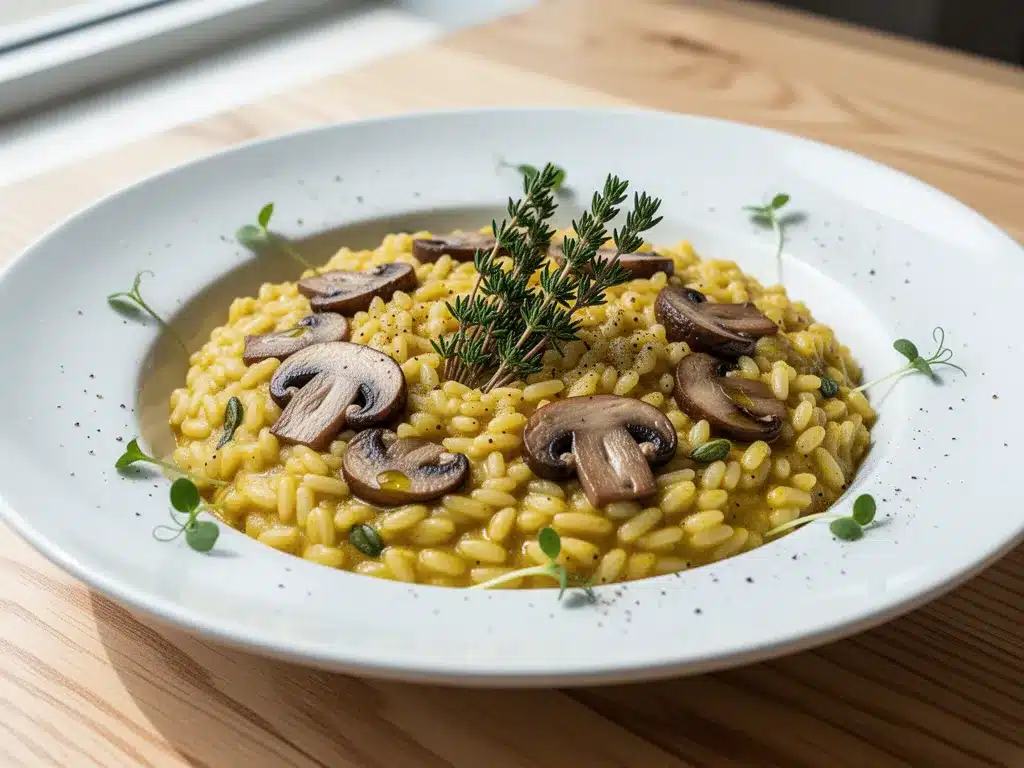
Cremini or Baby Bella Mushrooms (1 pound / 450g) — These are the standard brown mushrooms. They have more flavor than white button mushrooms. Slice them thick; you want them to have some texture, not turn into slime.
Dried Porcini Mushrooms (1 ounce / 28g) — This is the secret ingredient. Soak them in hot water for 15 minutes, then chop them up and add them to the pot. They impart a deep, meaty umami flavor that fresh mushrooms can’t achieve on their own. Don’t skip this if you can help it.
The Creaminess & Seasoning
Unsweetened Plant Milk (½ cup / 120ml) — I use oat milk or cashew milk. They are creamy and neutral. Almond milk is too watery. Soy milk works too but can have a bean aftertaste. The key is unsweetened and unflavored.
Nutritional Yeast (2 tablespoons) — This is the vegan parmesan. It adds a cheesy, nutty flavor. If you hate the taste of nutritional yeast, you can skip it, but I highly recommend getting used to it. It’s a staple in my pantry.
Soy Sauce or Tamari (1 tablespoon) — Again, not for Asian flavor, but for salt and umami depth. It makes the mushrooms taste richer.
Thyme and Rosemary (1 teaspoon fresh thyme, 1 sprig rosemary) — Fresh herbs are best. Dried works in a pinch, but use half the amount. Thyme and mushrooms are best friends.
Black Pepper — Freshly cracked. Lots of it.
Equipment Needed
You don’t need fancy gadgets. Here’s what I actually use:
Large Dutch Oven or Heavy-Bottomed Pot — This is crucial. You need a pot with a tight-fitting lid and good heat retention. A thin saucepan will burn the rice on the bottom. I use my 5-quart Le Creuset, but any heavy pot works. The wide surface area helps the rice cook evenly.
Wooden Spoon — For stirring. Silicone works too. You’ll be stirring occasionally, but not constantly.
Sharp Knife and Cutting Board — For slicing mushrooms and dicing onions. A dull knife makes mushroom slicing a nightmare.
Measuring Cups and Spoons — Standard stuff.
Strainer — For rinsing the rice (optional, but I do it to remove excess starch) and for draining the soaked porcini mushrooms.
How to Make It: Step-by-Step
Alright, let’s make this! I’m walking you through exactly how I do it. It’s simple, but there are a few tricks to get that perfect creamy texture.
Step 1: Prep Your Mushrooms (5 minutes)
If you’re using dried porcini, soak them in 1 cup of hot water for 15 minutes. Once soft, lift them out (don’t pour in the sediment!), chop them, and set them aside. Keep that soaking liquid; it’s liquid gold. Strain it through a coffee filter or fine mesh sieve to remove any grit.
Slice your fresh cremini mushrooms. Don’t wash them under water; just wipe them with a damp paper towel. Wet mushrooms steam instead of sauté.
Step 2: Sauté the Aromatics (3 minutes)
Heat the olive oil in your Dutch oven over medium heat. Add the diced onion and a pinch of salt. Cook for 3-4 minutes until translucent and soft. Add the garlic and cook for another minute until fragrant. Don’t let the garlic brown, or it will taste bitter.
Step 3: Toast the Rice (2 minutes)
Add the Arborio rice to the pot. Stir it around in the oil and onions for about 2 minutes. You want the edges of the rice grains to become translucent. This toasting step helps the rice hold its structure later. It should smell nutty and roasted.
Step 4: Deglaze with Wine (2 minutes)
Pour in the white wine. It will sizzle and steam. Stir it constantly for about 1-2 minutes until the alcohol smell cooks off and the liquid is almost evaporated. This adds acidity to balance the richness.
Step 5: The Simmer (25-30 minutes)
Here’s the big difference from traditional risotto. Add all the vegetable broth at once, along with the chopped porcini mushrooms, the porcini soaking liquid (strained), the dried thyme, and the rosemary sprig. Stir well. Bring it to a boil, then immediately reduce the heat to low. Cover with the lid.
Let it simmer for 25 minutes. Do not lift the lid for the first 15 minutes. After 15 minutes, give it a stir to make sure nothing is sticking to the bottom. Then cover and let it finish cooking. The rice will absorb the liquid and become tender.
Step 6: The Finish (3 minutes)
Check the rice. It should be tender but still have a slight bite (al dente). If it’s too hard and there’s no liquid left, add a splash more hot water and cook for another 5 minutes. If it’s done but too soupy, remove the lid and let it sit for 2 minutes to thicken.
Remove the pot from the heat. Discard the rosemary sprig. Stir in the plant milk, nutritional yeast, soy sauce, and most of the sautéed fresh mushrooms (reserve some for garnish). Stir vigorously for 1-2 minutes. The rice will release more starch and become creamy.
Taste and adjust seasoning. Add more salt, pepper, or nutritional yeast if needed. The flavor should be bold and savory.
Step 7: Serve
Serve immediately while hot. Top with the reserved sautéed mushrooms, a drizzle of good olive oil, fresh cracked black pepper, and maybe some fresh parsley. It’s beautiful and comforting.
Expert Tips & Tricks
Here’s everything I’ve learned from making this dozens of times. These tips will save you from my mistakes.
Sauté the Fresh Mushrooms First — I mentioned adding them at the end, but I recommend sautéing half of them in a separate pan with a little oil until browned before you start the risotto. Add them back in at the end. This gives you that nice, caramelized mushroom texture, whereas the ones cooked inside the pot will be softer and more integrated into the rice.
Don’t Skip the Porcini — I know they’re an extra step, but they add a depth of flavor that fresh mushrooms can’t match. If you absolutely can’t find them, use more fresh mushrooms and a teaspoon of mushroom bouillon powder in the broth.
Keep the Heat Low — When simmering, your flame should be low. You want a gentle bubble, not a rolling boil. High heat will dry out the rice before it’s tender.
The Rice Should Be Creamy, Not Soupy — If your risotto looks too thick when you take the lid off, add hot water a tablespoon at a time. It should flow like lava. If it’s too runny, let it sit uncovered for a few minutes.
Use Warm Broth — I know it’s extra work, but warming your broth before adding it helps maintain the cooking temperature. If you’re adding cold broth to hot rice, the cooking process slows down and can become uneven.
Variations & Substitutions
Once you’ve nailed the basic version, here’s how you can mix it up. I’ve tried all of these.
Truffle Oil Finish — Drizzle a little truffle oil over the top right before serving. It’s fancy and smells incredible. Just a little goes a long way.
Spinach and Lemon — Stir in 2 cups of fresh spinach in the last 2 minutes of cooking. Add the zest of one lemon. It’s brighter and lighter, perfect for spring.
Wild Mushroom Mix — Use chanterelles or oyster mushrooms instead of cremini. They have more complex flavors. Sauté them separately and fold them in at the end.
Gluten-Free Check — Most Arborio rice is GF, but double-check your broth. Some brands use wheat-based thickeners. Tamari is GF, whereas regular soy sauce is not.
Dairy-Free Creaminess — If you want it extra rich, stir in 2 tablespoons of vegan butter or coconut cream at the very end. It’s optional but delicious.
Serving & Storage
How to Serve: I usually serve this straight from the pot at the dinner table. It looks rustic and stays warm. Pair it with a simple green salad with a vinaigrette to cut through the richness. Garlic bread is optional, but if you’re doing vegan, maybe toast some baguette slices with olive oil and garlic.
Storage: Store leftovers in an airtight container in the fridge for up to 4 days. The rice will absorb more liquid and become thicker.
Reheating: This is the tricky part. Risotto reheats best on the stove. Add a splash of water or vegetable broth to a skillet, add the cold risotto, and heat over medium-low, stirring frequently until warm and creamy. The microwave works but can make the rice rubbery. If you must microwave, add a tablespoon of water, cover, and heat in 30-second intervals, stirring in between.
Freezing: I don’t recommend freezing this. The texture of the rice changes when frozen and thawed; it can become grainy. It’s best eaten fresh or refrigerated.
Nutrition Information
I’m not a nutritionist, but here’s the breakdown if you’re tracking. Per serving (based on 6 servings):
| Nutrient | Amount |
|---|---|
| Calories | 320 |
| Protein | 8g |
| Carbs | 52g |
| Fiber | 3g |
| Sugar | 2g |
| Fat | 9g |
| Saturated Fat | 1g |
| Sodium | 450mg |
It’s a hearty meal with good carbs from the rice and fiber from the mushrooms. It’s naturally vegan and gluten-free. When I want to make it lighter, I add extra vegetables like zucchini or bell peppers.
Final Thoughts
So that’s my go-to vegan one-pot mushroom risotto! I’ve probably talked your ear off at this point, but when you make a recipe this often, you have a lot to say about it.
This has saved weeknight dinners more times than I can count. It’s my answer to “what’s for dinner” when I’m tired, don’t want takeout, and still want something that tastes really good. My kids are happy, my husband’s happy, and I’m happy because I’m not stressed about cooking.
Make it yours! Try different add-ins, swap in your favorite vegetables, adjust the garlic (though more is always better in my opinion). The best recipes are the ones you adapt to your family’s tastes.
If you make this, drop a comment and let me know what you think! I love hearing how recipes turn out in your kitchen. And if something doesn’t work, tell me that too—I’m here to help troubleshoot.
Happy cooking! And I hope your kitchen smells half as good as mine does right now.
Frequently Asked Questions
Can I use Jasmine rice instead of Arborio?
No, I don’t recommend it. Jasmine rice is long-grain and doesn’t have the same starch content. It won’t become creamy. You need a short-grain rice like Arborio, Carnaroli, or even Paella rice. It’s worth buying the right rice for this dish.
Why did my risotto turn out mushy?
This usually happens if you overcooked it or added too much liquid. Make sure you check the rice at the 25-minute mark. It should be tender but still have a slight bite. If it’s too soft, you cooked it too long. Also, make sure you’re using the right amount of broth. The ratio is key.
Can I make this ahead for a dinner party?
Sort of. You can prep the mushrooms and chop the onions ahead of time. But the risotto itself is best made fresh. If you make it early, it will continue to absorb liquid and become thick. You can reheat it with extra broth, but it won’t be quite as perfect as fresh. I usually start the simmering process about 30 minutes before I want to eat.
Is nutritional yeast necessary?
It’s not strictly necessary, but it adds a cheesy, savory flavor that mimics parmesan. If you don’t have it, you can skip it, but the dish will be less complex. You can also try adding a teaspoon of white miso paste for umami depth.
Can I use red wine instead of white?
You can, but red wine has a stronger, tannic flavor that might overpower the delicate mushroom taste. White wine is lighter and brighter, which pairs better with risotto. If you only have red, use a dry one and use a little less.
How do I know when the rice is done?
Taste it! It should be tender but not crunchy. It should also be creamy. If it’s still hard in the center, add a little more hot water and cook for another 5 minutes. If it’s creamy but hard, it needs more time. If it’s mushy, you’ve gone too far.
Pin This Recipe!
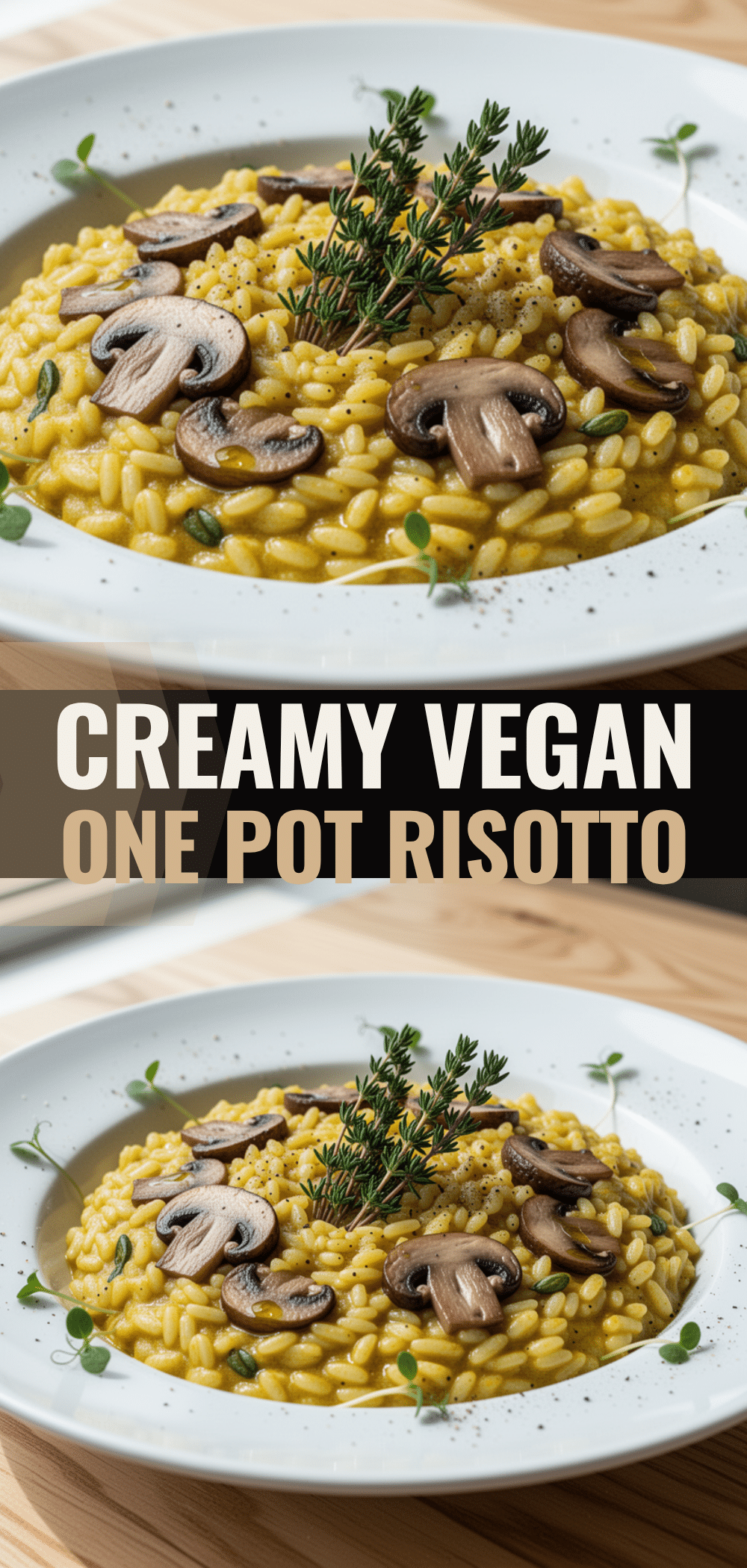

Vegan One-Pot Mushroom Risotto: Easy Weeknight Dinner
- Total Time: 45 minutes
- Yield: 6 servings 1x
Description
A creamy, dairy-free mushroom risotto that requires zero stirring and minimal cleanup. This one-pot meal uses Arborio rice, dried porcini, and plant milk to achieve a rich, restaurant-quality texture without the traditional effort.
Ingredients
- 1 ½ cups Arborio rice
- 4 to 5 cups vegetable broth (low-sodium, kept warm)
- ½ cup dry white wine (e.g., Sauvignon Blanc or Pinot Grigio)
- 1 medium yellow onion, finely diced
- 3 cloves garlic, minced
- 3 tablespoons extra virgin olive oil
- 1 pound cremini or baby bella mushrooms, sliced
- 1 ounce dried porcini mushrooms, soaked and chopped
- ½ cup unsweetened plant milk (oat or cashew)
- 2 tablespoons nutritional yeast
- 1 tablespoon soy sauce or tamari
- 1 teaspoon fresh thyme
- 1 sprig fresh rosemary
- Freshly cracked black pepper
- Salt to taste
Instructions
- Soak dried porcini mushrooms in hot water for 15 minutes. Lift them out, chop them, and set aside. Strain the soaking liquid to remove grit and reserve it.
- Wipe fresh cremini mushrooms with a damp paper towel and slice them thickly.
- Heat olive oil in a large Dutch oven or heavy-bottomed pot over medium heat. Add diced onion and a pinch of salt; cook for 3-4 minutes until translucent.
- Add minced garlic and cook for 1 minute until fragrant, being careful not to brown it.
- Add Arborio rice to the pot and stir for 2 minutes until the edges become translucent and the rice smells nutty.
- Pour in white wine and stir constantly for 1-2 minutes until the alcohol smell cooks off and liquid is almost evaporated.
- Add all vegetable broth, chopped porcini mushrooms, strained porcini soaking liquid, thyme, and rosemary sprig. Stir well.
- Bring to a boil, then immediately reduce heat to low. Cover with lid and simmer for 25 minutes. Do not lift the lid for the first 15 minutes.
- After 15 minutes, stir once to prevent sticking, then cover and finish cooking.
- Check rice for tenderness (al dente). If too hard, add splash of hot water and cook 5 more minutes. If too soupy, remove lid and sit for 2 minutes.
- Remove from heat and discard rosemary sprig.
- Stir in plant milk, nutritional yeast, soy sauce, and most of the fresh mushrooms (reserve some for garnish). Stir vigorously for 1-2 minutes until creamy.
- Taste and adjust seasoning with salt, pepper, or nutritional yeast.
- Serve immediately, topped with reserved mushrooms, a drizzle of olive oil, and fresh black pepper.
Notes
For best texture, sauté half of the fresh mushrooms separately until browned before starting the risotto, then add them back at the end. Keep the heat low during simmering to ensure even cooking. Risotto reheats best on the stove with added liquid; freezing is not recommended as the rice texture may become grainy.
- Prep Time: 15 minutes
- Cook Time: 30 minutes
- Category: Main Course
- Cuisine: Italian
Nutrition
- Serving Size: 1 bowl
- Calories: 320
- Sugar: 2
- Sodium: 450
- Fat: 9
- Saturated Fat: 1
- Carbohydrates: 52
- Fiber: 3
- Protein: 8
Keywords: vegan risotto, one pot dinner, mushroom risotto, gluten free, dairy free, weeknight dinner, easy vegan recipes, creamy risotto


