Last Tuesday, I was running late. You know the kind of late where you’ve already spilled coffee on your shirt, the dog is barking at the door, and you’re realizing you skipped breakfast because you were up too late scrolling through recipes. I grabbed my keys, sprinted to the car, and stopped at that drive-thru smoothie place on the corner. You know the one. The one with the giant picture of a fruit bowl that looks nothing like what’s actually in the cup.
I paid $8 for a drink that was mostly ice and sugar syrup. I took one sip in my rearview mirror and felt that familiar wave of guilt. It was sweet, sure. But it tasted like artificial mango flavor and regret. I threw it in the passenger seat (don’t judge, I was stressed) and went to work. By 10 AM, I was hungry again. By noon, I was regretting that $8 decision.
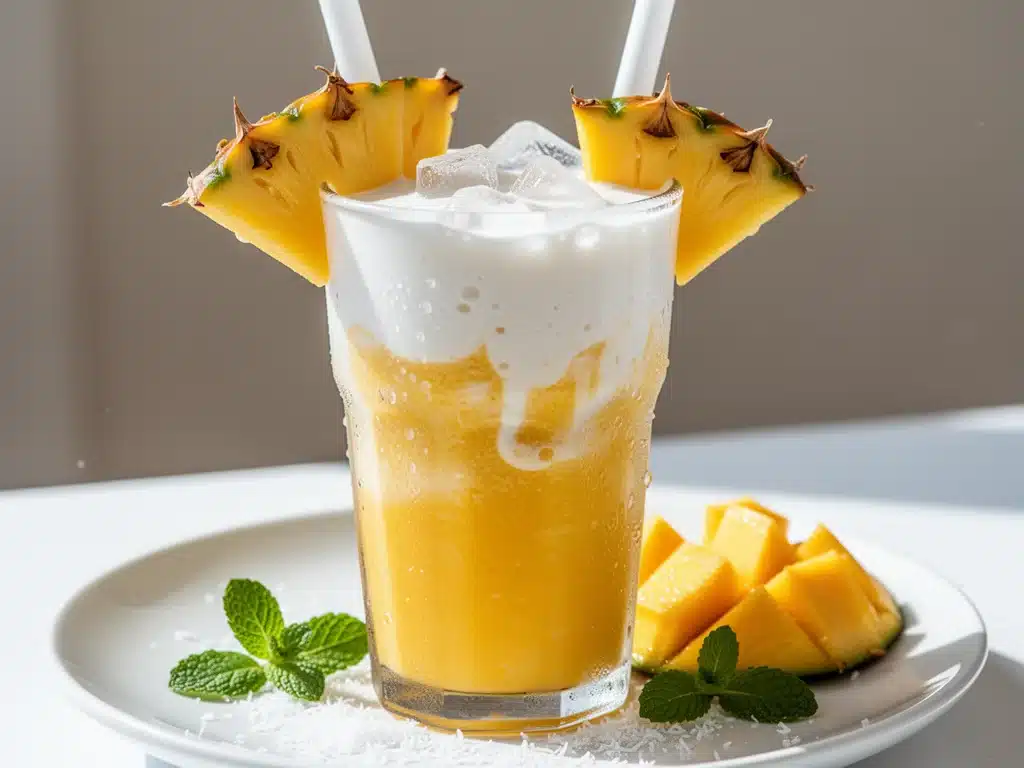
That was the breaking point. I realized I was spending a fortune on drinks that didn’t even make me feel full or energized. I wanted something real. Something that tasted like actual sunshine but didn’t require 20 minutes of prep before my alarm went off. That’s when I started obsessing over this frozen mango pineapple smoothie with coconut milk. It’s not just a smoothie; it’s my 5-minute morning rescue mission.
I’ve tested this recipe probably fifty times over the last six months. I’ve tweaked the fruit ratios, swapped out the milk, and even tried adding greens (which my family rejected, so we’re sticking to the classic). The result? A creamy, tropical, naturally sweet drink that takes exactly as long as it takes to hit “blend” on your machine. It’s perfect for busy mornings when you need nutrition without the fuss. And honestly? It tastes better than anything from a cup with a straw.
Why You’ll Love This Tropical Smoothie
There are about ten reasons I keep making this frozen mango pineapple smoothie with coconut milk, but here are the big ones that keep it in my weekly rotation.
Naturally Sweet, No Added Sugar — Seriously. The sweetness comes entirely from ripe mangoes and pineapples. I don’t add honey, maple syrup, or sugar. If your fruit is ripe, you don’t need anything else. This is huge for me because I’m always wary of hidden sugars in store-bought options. This smoothie gives you that candy-like sweetness but with actual fiber and vitamins.
Creamy Without the Dairy — The coconut milk is the secret weapon. It adds this rich, velvety texture that usually requires yogurt or ice cream. But here, it’s just coconut milk. It makes the smoothie feel indulgent and dessert-like, but it’s completely dairy-free. I love that I can make this for my lactose-intolerant friends without worrying. It’s lush and thick, not watery or icy.
Prep Ahead for Chaos Mornings — The best part? You can prep the fruit bags on Sunday. I chop a whole bag of mangoes and pineapples, freeze them in ziplock bags, and toss one in the blender on Monday morning. It takes 60 seconds. If you’re rushing out the door, you can even throw frozen fruit into a mason jar, grab it, and blend it at the office or in the car (if you have a portable blender). It’s the ultimate hack for busy mornings.
Anti-Inflammatory Powerhouse — Mangoes are packed with Vitamin C, and pineapples contain bromelain, an enzyme that helps reduce inflammation and aids digestion. Coconut milk has healthy fats that keep you full. It’s basically a health boost in a glass. I drink this on days when I feel sluggish, and I swear it wakes me up faster than coffee.
Cost-Effective — Making this at home costs about $1.50 per serving. Buying a similar-sized tropical smoothie at a cafe will set you back $7 to $10. Over a month, that’s a ton of money saved. Plus, you control the quality of the ingredients. No mystery syrups.
This is my go-to when I need breakfast to just work. No complicated techniques, no weird superfoods you have to hunt for, just reliable, delicious, tropical fuel that makes everyone happy.
Ingredients You’ll Need
Here’s the best part: you probably have most of this already, or it’s super easy to grab. I’m particular about two things here—the ripeness of the fruit and the type of coconut milk—but otherwise, this is a breeze.
Frozen Mango Chunks (2 cups / 200g) — This is non-negotiable for texture. Fresh mangoes won’t give you that slushie consistency. I buy frozen chunks because they’re pre-peeled and pitted. Look for ones that are bright yellow and smell sweet. If you can’t find frozen, freeze fresh ripe mango cubes yourself for 4 hours.
Frozen Pineapple Chunks (1 cup / 150g) — Again, frozen is key. It acts like the ice cubes but adds flavor. If you’re using fresh pineapple, freeze it first. The acidity cuts through the sweetness of the mango perfectly. Don’t skip this—it provides that zesty kick.
Coconut Milk (1 can / 400ml) — Use full-fat, canned coconut milk, not the carton beverage kind. The carton stuff is too thin and watery. You want the thick, creamy part from the can. Shake the can well before opening. If you prefer a lighter version, you can use light coconut milk, but it won’t be as rich.
Banana (1 medium, frozen) — I know some people skip banana, but for this specific smoothie, it adds extra creaminess and helps bind everything together. Freeze it ahead of time (peel it first, then freeze in a bag). It makes the texture incredibly smooth.
Lime Juice (1 tablespoon / 15ml) — Freshly squeezed is best. It brightens up the heavy sweetness of the tropical fruits. It’s a small amount, but it makes a huge difference in balancing the flavor profile. If you don’t have lime, lemon works too.
Optional: Spinach (1 handful / 30g) — I know, I said it was just mango and pineapple. But I sneak in a handful of spinach sometimes. You won’t taste it at all. The tropical flavors mask it completely. It’s an easy way to add a boost of iron and folate without changing the taste.
Ice (Optional) — Only add ice if your frozen fruit isn’t frozen solid. If you’re using properly frozen fruit and banana, you usually don’t need extra ice. It can water down the flavor if you add too much.
Pro Tip: I always keep a stash of frozen mango and pineapple in my freezer. It’s my pantry hack for busy mornings. If you buy fresh fruit, chop it up on the weekend and freeze it in portions. It saves so much time during the week.
Equipment Needed
You don’t need fancy equipment for this. Here’s what I actually use.
High-Speed Blender — I use a Vitamix, but you don’t need to spend $500. A standard blender works fine as long as it’s powerful enough to crush frozen fruit. If your blender struggles, let the fruit thaw for 5 minutes before blending, or add the coconut milk first to help it move.
Measuring Cups — Standard stuff. I use the liquid measuring cup for the coconut milk and the dry cups for the fruit.
Zester or Microplane — Optional, but if you want to zest a bit of lime into the smoothie, this makes it easy. Adds a nice aromatic touch.
Mason Jars — I like to drink this directly from a mason jar. It’s sturdy, easy to clean, and looks great for photos if you’re sharing your morning routine online.
Freezer Bags — For prepping the fruit portions ahead of time. Ziplock bags work perfectly.
How to Make It: Step-by-Step
Alright, let’s make this! I’m walking you through exactly how I do it, including the little tricks I’ve picked up to ensure it’s perfectly smooth every time.
Step 1: Prep the Fruit (If not pre-frozen)
If you’re using fresh fruit, chop the mango and pineapple into chunks. Peel the banana and place everything in a freezer bag. Freeze for at least 4 hours, or ideally overnight. This ensures the smoothie is thick and slushy, not watery. If you’re using store-bought frozen fruit, you can skip this step. Just grab the bags.
Step 2: Add Ingredients to Blender
Start with the liquid. Pour the coconut milk into the blender first. This helps the blades move freely and prevents the frozen fruit from getting stuck. Then add the frozen mango chunks, frozen pineapple chunks, frozen banana, and lime juice. If you’re adding spinach, toss it in now.
Step 3: Blend on High
Secure the lid tightly. Start the blender on low speed to break up the large chunks, then quickly increase to high. Blend for 45-60 seconds. You want the mixture to be completely smooth with no visible pieces of fruit. If it’s too thick and the blender is struggling, add a splash more coconut milk, one tablespoon at a time. Don’t add water—it dilutes the flavor.
Step 4: Taste and Adjust
Stop the blender and check the consistency. Is it too sweet? Add a squeeze more lime juice. Too tart? Add a little more mango. Too thin? Add a few ice cubes or more frozen fruit. This is where you customize it to your taste. I usually find the natural sweetness is perfect, but I always add that extra lime juice for brightness.
Step 5: Serve Immediately
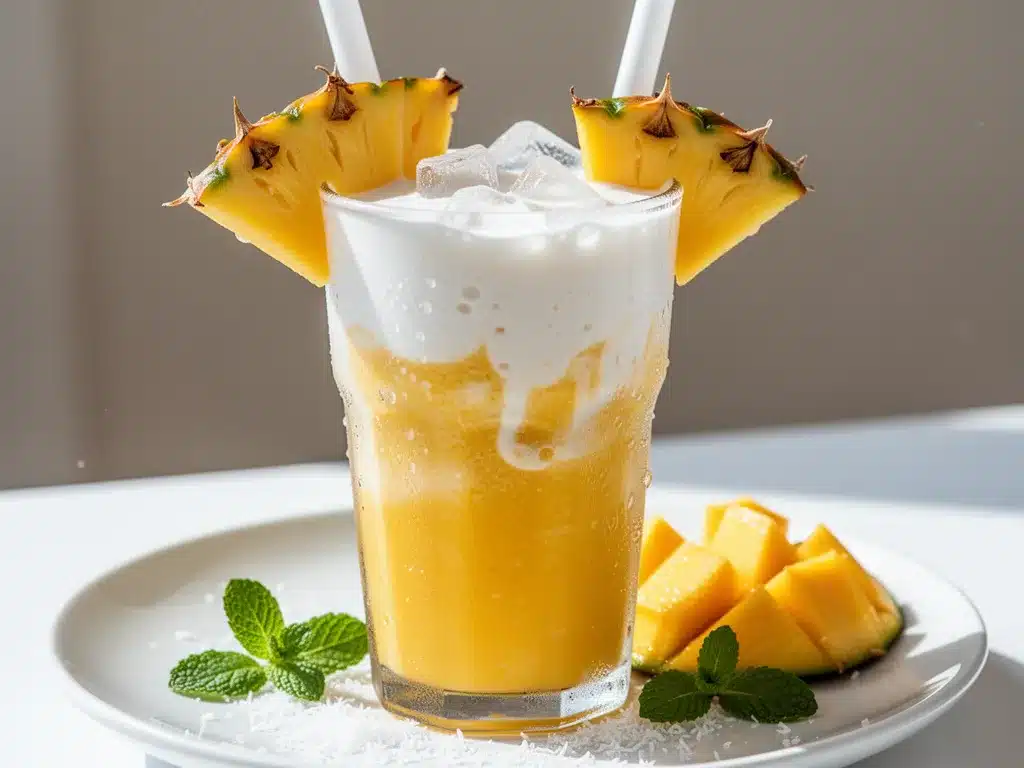
Pour into glasses or mason jars. Top with a slice of lime, a sprig of mint, or a few coconut flakes if you want to get fancy. Drink it right away while it’s cold and creamy. If you let it sit, it will start to separate and melt, which is fine, but it’s best fresh.
Total Time: About 5 minutes (1 minute prep, 4 minutes blend)
Expert Tips & Tricks
Here’s everything I’ve learned from making this dozens of times. These tips will save you from my mistakes.
Use Full-Fat Coconut Milk
This is the #1 tip. The creamy texture comes from the fat in the coconut milk. If you use the carton beverage, your smoothie will be thin and watery. You want the rich, thick stuff from the can. Shake it well before opening.
Frozen Fruit is Non-Negotiable
If you use fresh fruit and ice, your smoothie will be watery and weak. Frozen fruit creates that thick, milkshake-like consistency. If you don’t have frozen fruit, freeze your fresh fruit ahead of time. It’s worth the prep.
Don’t Skimp on Lime Juice
It’s easy to skip the lime, but it’s crucial. The acidity balances the intense sweetness of the mango and pineapple. Without it, the smoothie can taste cloying. Just a tablespoon makes a huge difference.
Blend Order Matters
Always add liquid first. This protects your blender blades and ensures a smooth blend. If you put frozen fruit on the bottom, it can jam the motor. Liquid first, fruit last.
Prep Ahead for Busy Mornings
I make smoothie packs on Sunday. I portion out the frozen fruit and banana into ziplock bags. In the morning, I just dump the bag into the blender and add the coconut milk. It takes 30 seconds. This is my secret to never skipping breakfast.
Common Mistakes:
– Sauce is too watery: Not enough frozen fruit or too much liquid. Add more frozen fruit or less coconut milk.
– Sauce is too thick: Add more coconut milk or let the fruit thaw for 5 minutes.
– Sauce is too sweet: Add more lime juice or a handful of spinach to balance it.
Variations & Substitutions
Once you’ve nailed the basic version, here’s how you can mix it up. I’ve tried all of these.
Green Tropical Smoothie
Add 1 handful of fresh spinach or kale. You won’t taste the greens, but you’ll get a nutrient boost. The tropical flavors mask the vegetable taste completely.
Protein-Packed Version
Add 1 scoop of vanilla protein powder. It adds creaminess and keeps you full longer. I use whey or plant-based protein. If the smoothie gets too thick, add a splash more coconut milk.
Turmeric Ginger Boost
Add ½ teaspoon of turmeric powder and a small piece of fresh ginger. It adds a nice warmth and anti-inflammatory benefits. Great for cold mornings.
Coconut Water Swap
Replace half the coconut milk with coconut water for a lighter, hydrating version. It’s less creamy but refreshing. Good for hot summer days.
Dairy-Free Yogurt
Add ½ cup of coconut yogurt for extra tang and creaminess. It adds probiotics and makes the texture even thicker.
Gluten-Free
This recipe is naturally gluten-free. Just ensure your coconut milk and fruit are certified gluten-free if you have celiac disease.
Serving & Storage
How to Serve:
I usually serve this straight from the blender into a tall glass. It looks vibrant and inviting. Garnish with a lime wheel or mint sprig for a nice touch. It’s perfect for brunch or a quick breakfast on the go.
Side Dishes:
– Whole grain toast with almond butter
– Greek yogurt parfait
– Fresh fruit salad
– Hard-boiled eggs for extra protein
Storage Instructions:
This smoothie is best enjoyed immediately. If you must store it, keep it in an airtight container in the fridge for up to 24 hours. It will separate, so just stir or shake it well before drinking. It won’t be as thick, but it’s still good. Do not freeze it again, as the texture will become grainy.
Meal Prep:
Prep the fruit bags ahead of time. Store them in the freezer. When you’re ready to make the smoothie, just dump the bag into the blender and add the coconut milk. It’s the ultimate time-saver.
Nutrition Information
I’m not a nutritionist, but here’s the breakdown if you’re tracking. This is per serving (makes 2 servings).
| Nutrient | Amount per Serving |
|---|---|
| Calories | 280 |
| Protein | 3g |
| Carbs | 45g |
| Fiber | 5g |
| Sugar | 35g (natural) |
| Fat | 12g |
| Sodium | 30mg |
What’s Good:
– High in Vitamin C from mango and pineapple
– Good source of fiber
– Healthy fats from coconut milk
– No added sugars
What to Know:
– Higher in natural sugars due to tropical fruits
– Contains coconut (tree nut)
– Moderate calories, but very filling
My Take:
Look, this is a sweet treat with natural sugars. It’s not a low-carb diet recipe. But it’s way better than a soda or a sugary pastry. It’s packed with nutrients and keeps you energized. When I want to make it lighter, I use less coconut milk and add more spinach. But usually? I just enjoy it as a delicious, healthy breakfast.
Final Thoughts
So that’s my go-to frozen mango pineapple smoothie with coconut milk! I’ve probably talked your ear off at this point, but when you make a recipe this often, you have a lot to say about it. This has saved my mornings more times than I can count. It’s my answer to “what’s for breakfast” when I’m rushing, don’t want to cook, and still want something that tastes amazing.
My kids love it, my husband loves it, and I love it because it’s healthy, quick, and delicious. Make it yours! Try different fruit combinations, add greens, or boost the protein. The best recipes are the ones you adapt to your family’s tastes.
If you make this, drop a comment and let me know what you think! I love hearing how recipes turn out in your kitchen. And if something doesn’t work, tell me that too—I’m here to help troubleshoot.
Happy blending! And I hope your mornings feel half as bright as this smoothie tastes.
Frequently Asked Questions
Can I use fresh mango and pineapple instead of frozen?
You can, but the texture will be different. Fresh fruit with ice will make the smoothie watery and icy. If you use fresh fruit, freeze the chunks beforehand for at least 4 hours. This ensures the smoothie is thick and creamy. I highly recommend using frozen fruit for the best texture.
Why did my smoothie turn out watery?
This usually happens if you use too much liquid or not enough frozen fruit. Make sure you’re using full-fat coconut milk and plenty of frozen fruit. If it’s too thin, add more frozen fruit or ice. If it’s too thick, add a splash more coconut milk.
Can I make this ahead for meal prep?
Yes! The best way to meal prep is to freeze the fruit portions in bags ahead of time. In the morning, just dump the bag into the blender and add the coconut milk. It takes 1 minute. If you blend it ahead of time, store it in an airtight container in the fridge for up to 24 hours. Stir well before drinking.
Can I add protein powder to this smoothie?
Absolutely! Add 1 scoop of vanilla protein powder for extra protein and creaminess. It blends well with the tropical flavors. If the smoothie gets too thick, add a splash more coconut milk to thin it out.
Is this smoothie dairy-free?
Yes, this recipe is naturally dairy-free. It uses coconut milk instead of dairy milk or yogurt. It’s perfect for those who are lactose intolerant or following a vegan diet. Just ensure your protein powder (if using) is also dairy-free.
Can I substitute coconut milk with another milk?
You can, but the texture and flavor will change. Almond milk or oat milk will make the smoothie thinner and less creamy. If you use these, you might need to add a banana or some ice to compensate for the lack of thickness. Coconut milk is key for that rich, tropical taste.
Pin This Recipe!
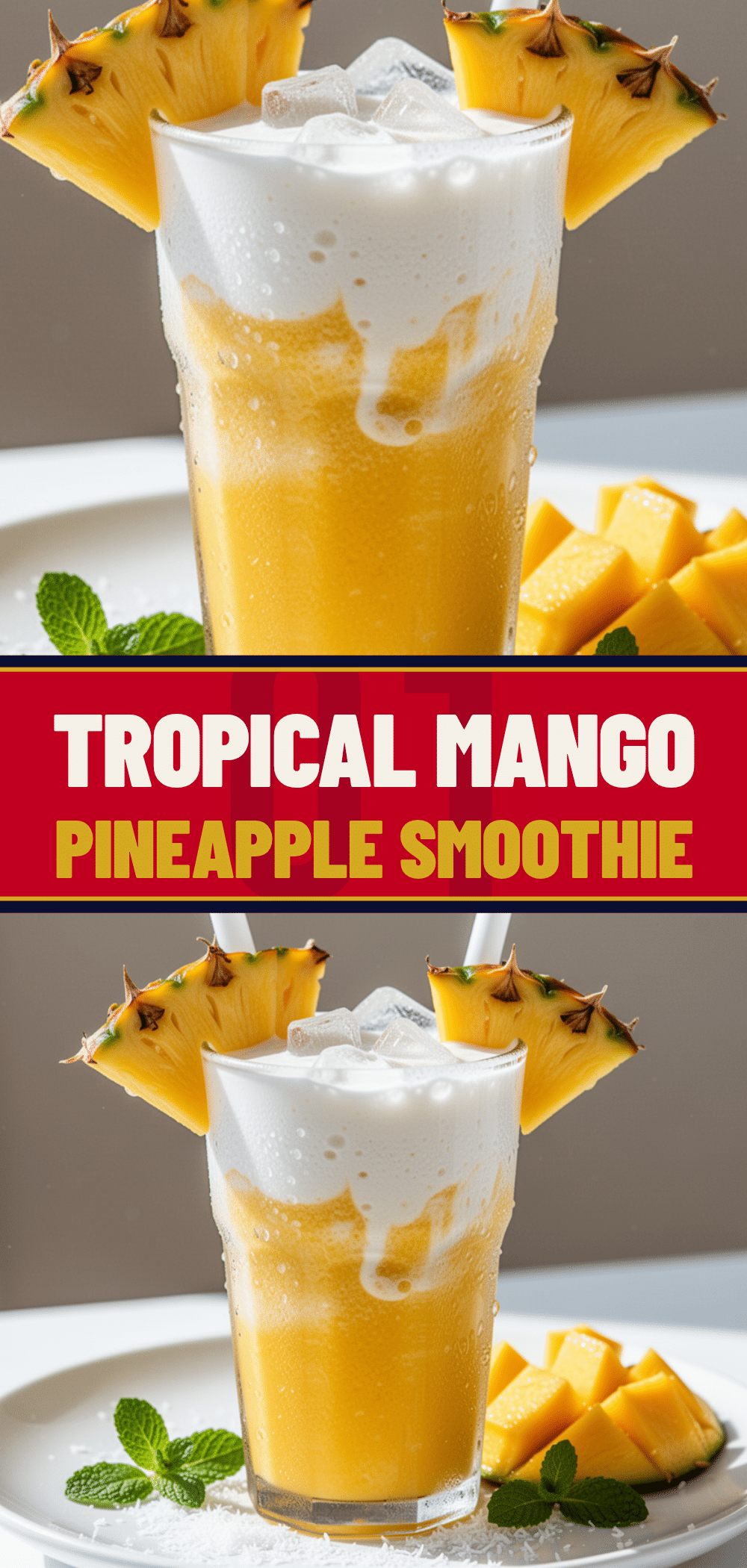
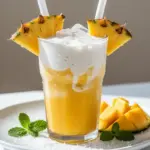
Frozen Mango Pineapple Smoothie: 5-Min Quick Breakfast
- Total Time: 5 minutes
- Yield: 2 servings 1x
Description
A creamy, tropical, and naturally sweet smoothie made with frozen mango, pineapple, and coconut milk. This dairy-free, gluten-free recipe takes just 5 minutes to prepare and provides a healthy, energizing breakfast option.
Ingredients
- 2 cups frozen mango chunks (200g)
- 1 cup frozen pineapple chunks (150g)
- 1 can (400ml) full-fat coconut milk
- 1 medium banana, frozen
- 1 tablespoon lime juice
- 1 handful spinach (optional, 30g)
- Ice (optional, if fruit isn’t frozen solid)
Instructions
- If using fresh fruit, chop mango and pineapple into chunks, peel and freeze the banana for at least 4 hours or overnight.
- Pour the coconut milk into the blender first to help the blades move freely.
- Add the frozen mango chunks, frozen pineapple chunks, frozen banana, and lime juice. Add spinach if using.
- Secure the lid and start the blender on low speed to break up chunks, then quickly increase to high.
- Blend for 45-60 seconds until the mixture is completely smooth.
- Taste and adjust: add more lime juice if too sweet, or more coconut milk if too thick.
- Pour into glasses or mason jars and serve immediately.
Notes
Use full-fat canned coconut milk for the best creamy texture. Frozen fruit is essential for a thick, slushie consistency. If the smoothie is too thick, add a splash of coconut milk. If too watery, add more frozen fruit. Best enjoyed immediately, but can be stored in the fridge for up to 24 hours.
- Prep Time: 1 minute
- Cook Time: 4 minutes
- Category: Breakfast
- Cuisine: Tropical
Nutrition
- Serving Size: 1 glass (approx. 14
- Calories: 280
- Sugar: 35
- Sodium: 30
- Fat: 12
- Saturated Fat: 10
- Carbohydrates: 45
- Fiber: 5
- Protein: 3
Keywords: smoothie, mango, pineapple, coconut milk, breakfast, healthy, dairy-free, gluten-free, quick recipe, tropical