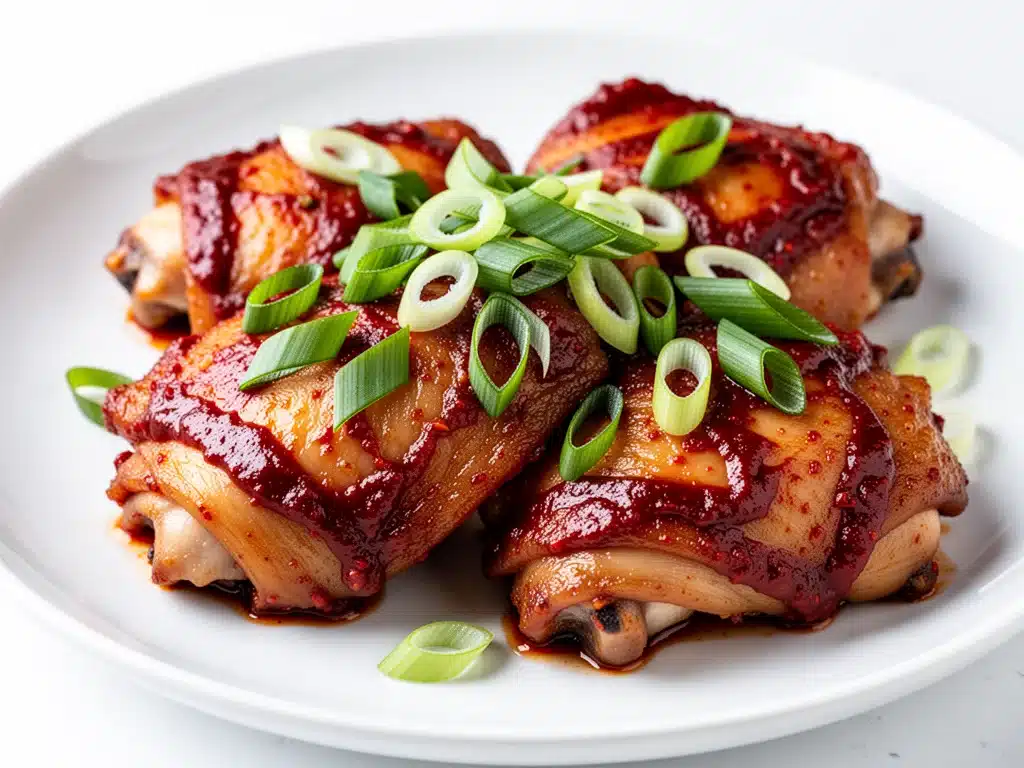
I still remember the exact night I decided to stop ordering takeout from the Chinese restaurant down the street. It was 11:30 PM, I was exhausted from work, and I had convinced myself that the $25 delivery fee was justified for a few minutes of peace. But then I walked into my kitchen, opened the fridge, and saw a jar of gochujang staring back at me. It was that familiar red tub I’d bought three years ago and never used because I thought it was too complicated.
So I improvised. I didn’t have the fancy ingredients from the restaurant, just chicken thighs, some scallions, and that jar of fermented chili paste. I threw them together in a panic, expecting a mediocre dinner at best. What I got was dinner at best. It was sweet, spicy, savory, and sticky in the best way possible. The smell alone made my apartment feel like a bustling Seoul street food stall.
I’ve made this Korean gochujang glazed chicken recipe dozens of times since that night. It’s not just my go-to weeknight dinner; it’s become the dish I make when I want to impress friends without spending hours in the kitchen. And the best part? It’s actually easier than calling for delivery. The sauce comes together in five minutes, the chicken cooks in one pan, and the cleanup is a breeze. If you’ve been searching for a Korean gochujang glazed chicken thighs with scallions better than takeout recipe, you’ve finally found it.
There’s something deeply satisfying about making restaurant-quality food at home. You control the spice level, you know exactly what’s going into the sauce, and you save a ton of money. This dish strikes that perfect balance between comfort and adventure. It’s bold, it’s flavorful, and it’s ready in under 30 minutes. Let’s get cooking.
Why You’ll Love This Recipe
Look, I’m not saying this will replace your favorite takeout spot forever, but it will definitely give it a run for its money. Here’s why this Korean gochujang glazed chicken thighs with scallions better than takeout version has earned a permanent spot in my weekly rotation:
- One-Pan Wonder — Seriously, if you can handle one skillet, you can make this. I’ve made this while juggling a toddler on my hip. It’s that simple. Less dishes means more time relaxing.
- Flavor Bomb — The sauce is a perfect harmony of sweet, spicy, salty, and umami. It’s not just “hot”; it’s complex. The gochujang brings a fermented depth that chili powder just can’t replicate.
- Super Fast — From start to finish, it’s about 25 minutes. That’s faster than waiting for a delivery driver to find your apartment. I make this on Tuesdays when I’m too tired to think.
- Chicken Thighs Are King — I use boneless, skinless thighs because they stay juicy and don’t dry out like breasts. Even if you overcook them slightly (we’ve all been there), they remain tender.
- Customizable Heat — Don’t like spice? Use less gochujang. Love fire? Add extra chili flakes. This recipe bends to your preferences.
- Budget-Friendly — Chicken thighs are cheap, and gochujang lasts forever in the fridge. This costs a fraction of what you’d pay for delivery.
This is the kind of recipe that makes you feel like a culinary genius. You’ll get compliments from your family, and you’ll wonder why you ever spent so much money on takeout.
Ingredients You’ll Need
Here’s the best part: most of these ingredients are probably already in your pantry or fridge. If not, they’re easy to find at any grocery store. I’m particular about a few things here, so pay attention to the notes.
For the Chicken
Boneless, skinless chicken thighs (1.5 pounds / 680g) — This is non-negotiable. Thighs have more fat, which means more flavor and moisture. Breasts will turn out dry and rubbery. If you only have breasts, use them, but reduce cooking time.
Vegetable oil (2 tablespoons) — I use canola or avocado oil. You need a high smoke-point oil for searing.
Salt and black pepper — To taste. I use about 1 teaspoon of salt and half a teaspoon of pepper for the chicken.
For the Glaze
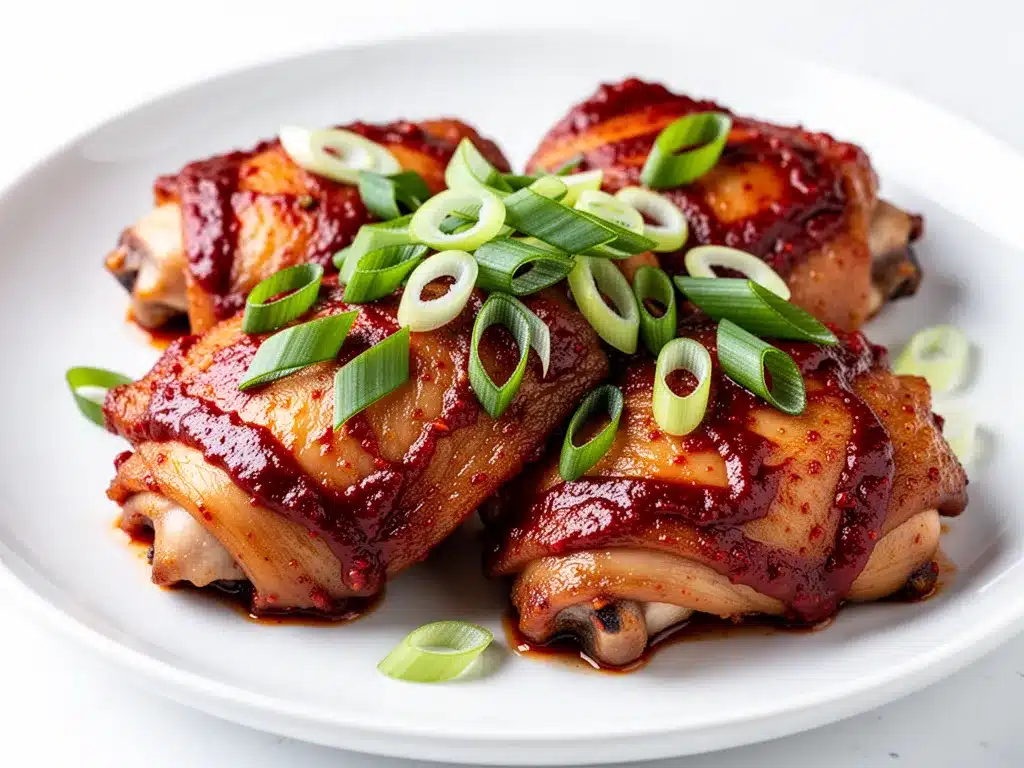
Gochujang paste (3 tablespoons) — This is the star. It’s a fermented Korean chili paste. Look for it in the Asian aisle of your supermarket. If you can’t find it, order it online—it’s worth it. Do not substitute with chili powder or sriracha; the flavor profile is totally different.
Soy sauce (2 tablespoons) — I use low-sodium soy sauce because gochujang is already salty. Regular soy sauce works, but you might want to reduce the salt in the chicken.
Honey (2 tablespoons) — This balances the heat and adds gloss. Maple syrup works too, but honey gives a nicer shine. Brown sugar is an okay substitute if you’re out of honey.
Rice vinegar (1 tablespoon) — Adds acidity to cut through the richness. White vinegar works in a pinch, but rice vinegar is milder and sweeter.
Garlic (4 cloves, minced) — Fresh garlic is essential. Jarred garlic has a metallic taste that clashes with the delicate fermentation of the gochujang.
Fresh ginger (1 teaspoon, grated) — Grate it on a microplane for a smooth paste. This adds a bright, zesty note.
Water (2 tablespoons) — Thins the sauce slightly so it coats the chicken without being too thick.
For the Garnish
Scallions (3-4 stalks, sliced) — Both the white and green parts. The white parts go in with the sauce for flavor; the green parts go on top for color and crunch. This is why the recipe is called “with scallions.”
Sesame seeds (1 tablespoon) — Toasted sesame seeds are best. They add a nutty aroma that elevates the dish.
Sesame oil (1 teaspoon) — A drizzle at the end for fragrance. Don’t skip this.
Equipment Needed
You don’t need fancy gadgets for this. Here’s what I actually use:
Large skillet or wok — I use a 12-inch non-stick skillet. A wok works too, but you need a wide surface area to sear the chicken properly. If you have a carbon steel wok, even better.
Small mixing bowl — For whisking the sauce. A 1-cup bowl is perfect.
Whisk — To combine the sauce ingredients smoothly. A fork works if you don’t have one.
Tongs — For turning the chicken. Spatulas can break the skin, so tongs are safer.
Microplane or grater — For the ginger. A regular grater works, but microplane gives a finer texture.
How to Make It: Step-by-Step
Alright, let’s make this! I’m walking you through exactly how I do it, including the little tricks I’ve picked up over time.
Step 1: Prep the Chicken (5 minutes)
Pat the chicken thighs dry with paper towels. This is crucial. Wet chicken steams instead of sears. If you want that beautiful caramelized crust, the surface needs to be dry. Season both sides generously with salt and black pepper. Set aside.
Step 2: Make the Sauce (3 minutes)
In your small bowl, whisk together the gochujang, soy sauce, honey, rice vinegar, minced garlic, grated ginger, and water. Stir until the honey is fully dissolved and the mixture is smooth. It should look like a thick, glossy red paste. Taste it—it should be spicy and sweet. Adjust if needed.
Step 3: Sear the Chicken (8-10 minutes)
Heat the vegetable oil in your large skillet over medium-high heat. Once the oil shimmers, add the chicken thighs in a single layer. Don’t overcrowd the pan; cook in batches if necessary. Let them cook undisturbed for 4-5 minutes. You’re looking for a deep golden-brown crust. Flip the chicken. Cook for another 3-4 minutes until cooked through. The internal temperature should reach 165°F (74°C). Remove the chicken from the pan and set it aside on a plate. Don’t wipe out the pan—we want those brown bits (fond) for flavor.
Step 4: Simmer the Glaze (2 minutes)
Reduce the heat to medium. Pour the sauce mixture into the same skillet. It will bubble and sizzle. Add the white parts of the scallions. Let the sauce simmer for 1-2 minutes, stirring constantly. It will thicken slightly. If it looks too thick, add a splash of water. If it’s too thin, let it simmer a bit longer.
Step 5: Combine and Coat (2 minutes)
Return the chicken to the pan. Toss the thighs in the sauce, making sure each piece is well-coated. Let them simmer in the sauce for 1 minute to absorb the flavors. The sauce should cling to the chicken, not pool at the bottom.
Step 6: Finish and Serve
Remove from heat. Drizzle with sesame oil. Transfer to a serving plate. Garnish generously with the green parts of the scallions and toasted sesame seeds. Serve immediately over steamed rice or with cauliflower rice.
Total Time: About 25 minutes (5 minutes prep, 20 minutes cooking).
Expert Tips & Tricks
Here’s everything I’ve learned from making this dozens of times. These tips will save you from my mistakes.
Pat Dry, Always
I cannot stress this enough. Moisture is the enemy of browning. If your chicken is wet, it will steam. Paper towels are your friend. I keep a roll specifically for this.
Don’t Burn the Garlic
Garlic burns quickly. When you add the sauce to the hot pan, keep the heat at medium, not high. Stir constantly. Burnt garlic tastes bitter and ruins the whole dish.
Toast Your Sesame Seeds
Raw sesame seeds are bland. Toast them in a dry pan for 2 minutes until they’re fragrant and lightly golden. It takes 2 minutes but adds so much depth.
Use Boneless, Skinless Thighs
Again, thighs are better. If you use breasts, they will dry out. If you must use breasts, reduce cooking time and keep a close eye on them.
The Sauce Should Coat, Not Pool
The goal is a glossy glaze, not a soup. If your sauce is too thin, let it reduce. If it’s too thick, add water. It should look like honey drizzling off a spoon.
Variations & Substitutions
Once you’ve nailed the basic version, here’s how you can mix it up. I’ve tried all of these.
Spicy Version
Add 1 teaspoon of gochugaru (Korean chili flakes) or a dash of sriracha to the sauce. This is for when you want to turn up the heat.
Sweet Version
Reduce the gochujang to 1 tablespoon and increase the honey to 3 tablespoons. This is great for kids or those who can’t handle spice.
Veggie-Loaded
Add sliced bell peppers, carrots, or broccoli to the pan when you simmer the sauce. Let them cook in the sauce for 2-3 minutes before adding the chicken back in.
Protein Swap
You can use this sauce with shrimp, tofu, or salmon. For tofu, press it first and fry until crispy before adding the sauce. For shrimp, cook for 2-3 minutes only.
Dietary Modifications
Gluten-Free: Use tamari instead of soy sauce. Gochujang is naturally gluten-free, but check the label.
Dairy-Free: This recipe is already dairy-free!
Lower Sugar: Substitute honey with a sugar-free sweetener like erythritol. The taste will be slightly different, but it works.
Serving & Storage
How to Serve: I usually serve this straight from the skillet at the dinner table—it looks rustic and stays warm. But here are other ways I’ve enjoyed it:
- Steamed Jasmine Rice — The classic pairing. The sauce soaks into the rice perfectly.
- Cauliflower Rice — For a low-carb option. It absorbs the sauce just as well.
- Over Noodles — Serve over soba or rice noodles for a noodle bowl.
- In Lettuce Wraps — Use butter lettuce leaves to wrap the chicken, rice, and a dollop of mayo. Fun and interactive.
Toppings Bar: When I have guests, I put out: extra sliced scallions, toasted sesame seeds, chili oil, and pickled vegetables. Everyone customizes their bowl.
Storage Instructions:
Refrigerator: Store in an airtight container for up to 4 days. The sauce will thicken in the fridge—totally normal.
Reheating: Best method: Add to a skillet with a splash of water or broth over low heat. Stir until heated through. Microwave method: Heat in 30-second intervals, stirring between. Add a splash of water if it’s too thick.
Freezing: This doesn’t freeze well because the sauce can separate. Make it fresh or store in the fridge for up to 4 days.
Nutrition Information
I’m not a nutritionist, but here’s the breakdown if you’re tracking.
Per Serving (based on 4 servings):
- Calories: 380
- Protein: 32g
- Carbs: 18g
- Fiber: 1g
- Sugar: 14g
- Fat: 20g
- Sodium: 680mg
What’s Good: High in protein, relatively low in carbs. The gochujang has some health benefits from capsaicin.
What to Know: Higher in sodium due to soy sauce and gochujang. Use low-sodium soy sauce to reduce. The sugar comes from honey, so adjust if you’re watching sugar intake.
My Take: Look, this is comfort food. It’s not a diet recipe. But it’s way better than takeout, costs less, and I know exactly what’s in it. When I want to make it lighter, I serve it over cauliflower rice. But usually? I just eat a reasonable portion and enjoy it.
Final Thoughts
So that’s my go-to Korean gochujang glazed chicken thighs with scallions better than takeout recipe! I’ve probably talked your ear off at this point, but when you make a recipe this often, you have a lot to say about it.
This has saved weeknight dinners more times than I can count. It’s my answer to “what’s for dinner” when I’m tired, don’t want takeout, and still want something that tastes really good. My kids are happy, my husband’s happy, and I’m happy because I’m not stressed about cooking.
Make it yours! Try different add-ins, swap in your favorite vegetables, adjust the garlic (though more is always better in my opinion). The best recipes are the ones you adapt to your family’s tastes.
If you make this, drop a comment and let me know what you think! I love hearing how recipes turn out in your kitchen. And if something doesn’t work, tell me that too—I’m here to help troubleshoot.
Happy cooking! And I hope your kitchen smells half as good as mine does right now.
Frequently Asked Questions
Q: What is gochujang?
A: Gochujang is a Korean fermented chili paste. It’s thick, red, and has a complex flavor that’s spicy, sweet, and savory all at once. It’s a staple in Korean cooking. You can find it in the Asian aisle of most grocery stores or online.
Q: Can I use gochugaru instead of gochujang?
A: No, they are different. Gochugaru is Korean chili flakes—it’s dry and spicy. Gochujang is a paste. If you use flakes, you’ll need to add sugar and soy sauce to mimic the paste, but it won’t be the same. Buy the paste.
Q: How spicy is this recipe?
A: It’s medium heat. The gochujang is spicy, but the honey and soy sauce balance it out. If you’re sensitive to spice, reduce the gochujang to 1 tablespoon. If you love heat, add extra chili flakes.
Q: Can I make this ahead of time?
A: You can prep the sauce ahead and store it in the fridge for up to 3 days. Cook the chicken fresh. The chicken doesn’t store well if marinated too long because the acid in the vinegar can start to break it down.
Q: Why did my sauce separate?
A: This usually happens if the heat was too high when you added the honey or if you reheated it too aggressively. Keep the heat low when combining the sauce, and reheat gently.
Q: Can I use chicken breasts?
A: Yes, but they will dry out faster. Reduce cooking time to 3-4 minutes per side and keep a close eye on them. Thighs are still recommended for juiciness.
Q: What do I serve with this?
A> Steamed rice is the classic choice. But it also goes well with stir-fried vegetables, cucumber salad, or in lettuce wraps. Get creative!
Pin This Recipe!
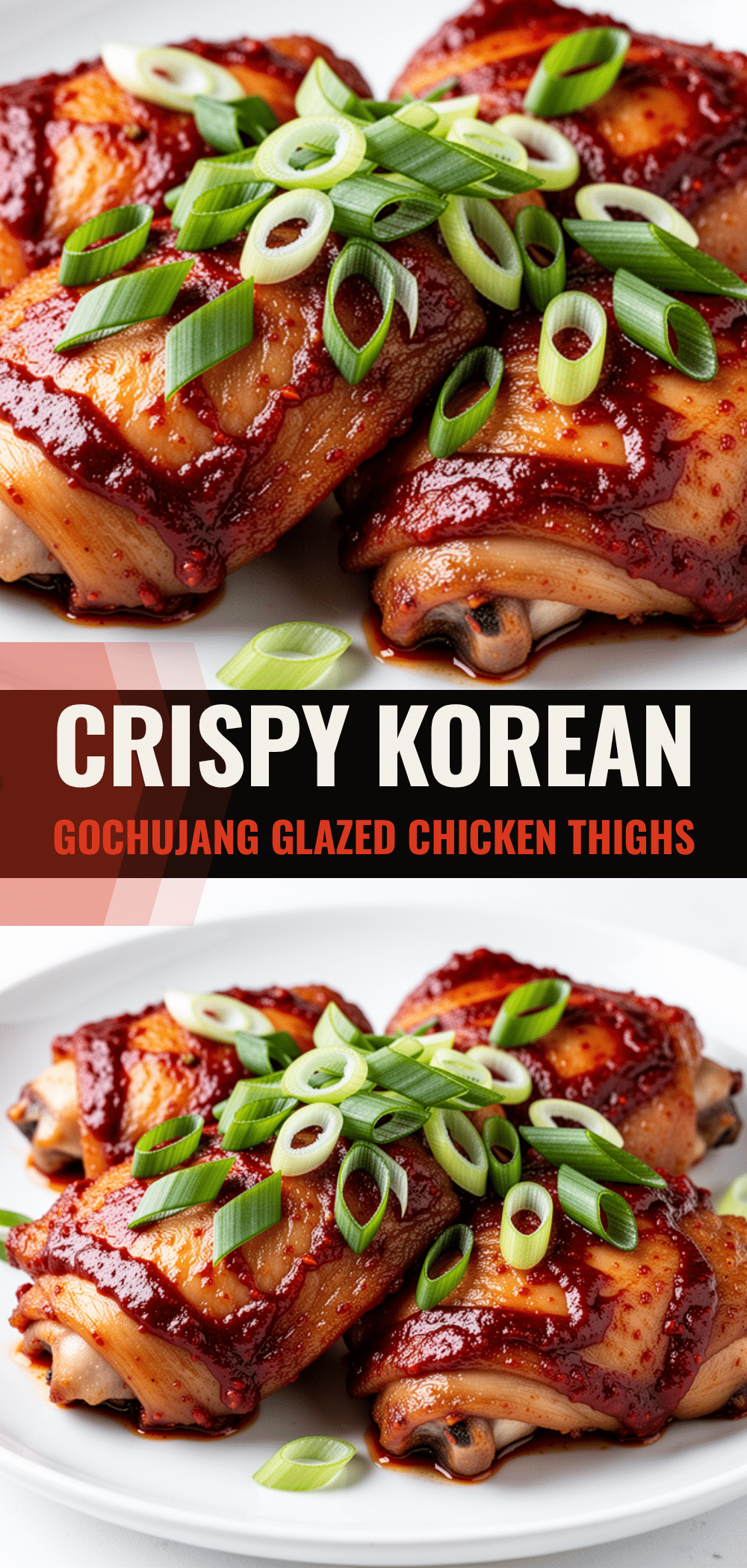
Korean Gochujang Glazed Chicken Thighs: Best Easy Takeout Recipe
- Total Time: 25 minutes
- Yield: 4 servings 1x
Description
A quick, one-pan Korean-inspired dish featuring juicy chicken thighs in a sweet, spicy, and savory gochujang glaze. Ready in under 30 minutes, this recipe offers restaurant-quality flavor at home.
Ingredients
- 1.5 pounds boneless, skinless chicken thighs
- 2 tablespoons vegetable oil (canola or avocado)
- 1 teaspoon salt
- 0.5 teaspoon black pepper
- 3 tablespoons gochujang paste
- 2 tablespoons low-sodium soy sauce
- 2 tablespoons honey
- 1 tablespoon rice vinegar
- 4 cloves garlic, minced
- 1 teaspoon fresh ginger, grated
- 2 tablespoons water
- 3–4 stalks scallions, sliced (white and green parts separated)
- 1 tablespoon toasted sesame seeds
- 1 teaspoon sesame oil
Instructions
- Pat chicken thighs dry with paper towels and season both sides generously with salt and black pepper.
- In a small bowl, whisk together gochujang, soy sauce, honey, rice vinegar, minced garlic, grated ginger, and water until smooth.
- Heat vegetable oil in a large skillet over medium-high heat. Add chicken thighs in a single layer and sear undisturbed for 4-5 minutes until golden brown.
- Flip chicken and cook for another 3-4 minutes until internal temperature reaches 165°F (74°C). Remove chicken from pan and set aside.
- Reduce heat to medium. Pour sauce mixture into the same skillet and add white parts of scallions. Simmer for 1-2 minutes, stirring constantly, until slightly thickened.
- Return chicken to the pan and toss to coat evenly in the sauce. Simmer for 1 minute to absorb flavors.
- Remove from heat, drizzle with sesame oil, and transfer to a serving plate.
- Garnish with green parts of scallions and toasted sesame seeds. Serve immediately over steamed rice or cauliflower rice.
Notes
Patting the chicken dry is crucial for a good sear. Do not substitute gochujang with chili powder or sriracha as the flavor profile is different. If using chicken breasts, reduce cooking time to prevent drying out. For a gluten-free version, use tamari instead of soy sauce.
- Prep Time: 5 minutes
- Cook Time: 20 minutes
- Category: Main Course
- Cuisine: Korean
Nutrition
- Serving Size: 1 chicken thigh with
- Calories: 380
- Sugar: 14
- Sodium: 680
- Fat: 20
- Carbohydrates: 18
- Fiber: 1
- Protein: 32
Keywords: Korean chicken, gochujang, glazed chicken, one-pan dinner, easy takeout recipe, spicy chicken, weeknight dinner, chicken thighs


