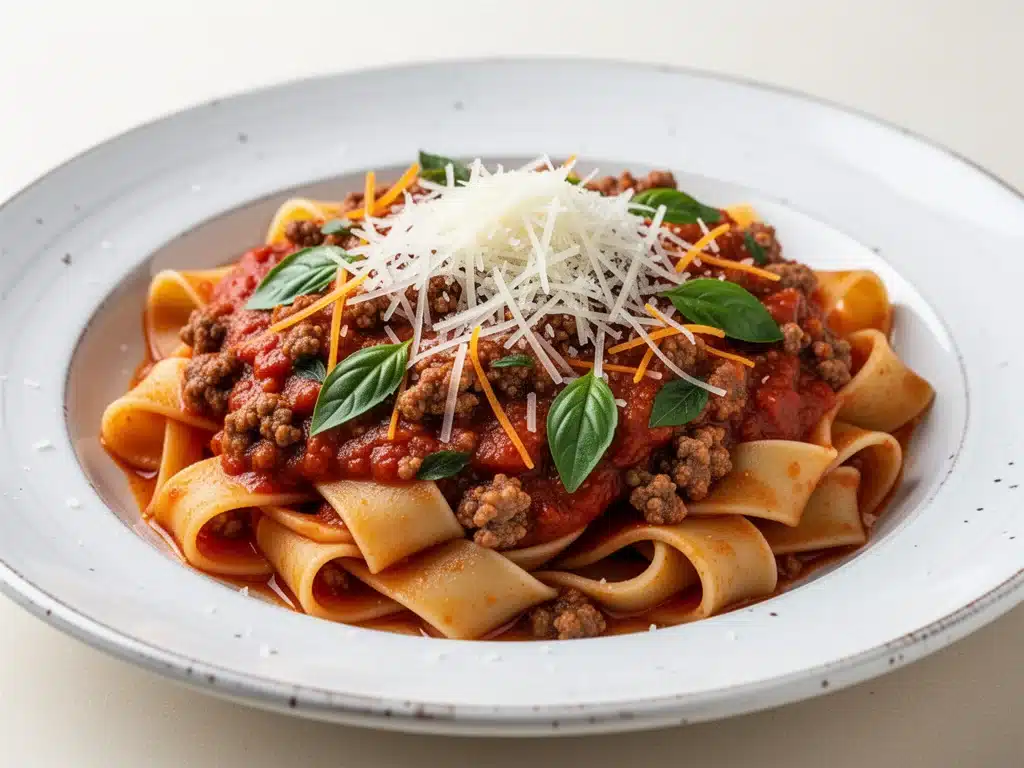
I have a confession to make. For years, I was one of those people who thought a “good” Bolognese was the kind you got in a jar, heated up, and dumped over pasta with zero shame. I was lazy. I was also wrong.
The turning point happened about four years ago, during a trip to Bologna. I walked into a tiny, non-descript trattoria off the main square—no English menu, no tourists, just old men in flat caps drinking wine and eating. I ordered the tagliatelle al ragù. One bite, and I was done with jars forever. The sauce wasn’t just “tomato and meat.” It was deep, complex, sweet from the tomatoes, savory from the beef, and so tender it felt like it had been cooking for a century.
I came home determined to recreate that magic. My first few attempts? Disaster. Dry. Salty. Tasting like canned soup. But after roughly fifteen tries—and a few questionable grocery store runs—I finally cracked the code. It wasn’t about fancy ingredients. It was about patience, the right tomatoes, and knowing when to walk away from the stove.
This is my Authentic Italian Beef Bolognese with San Marzano Tomatoes. It’s the version that makes my nonna nod in approval (and that’s saying something). It’s rich, it’s deeply flavorful, and yes, it takes time. But I promise you, the smell of this filling your house will have everyone asking what the secret is. Spoiler: there is no secret, just really good San Marzano tomatoes and a lot of love.
Why You’ll Love This Beef Bolognese
There are a thousand pasta recipes out there, but this Authentic Italian Beef Bolognese with San Marzano Tomatoes sits in a league of its own. Here’s why it’s become the centerpiece of my weekly meal planning, and why I bet it will become yours too.
The Tomato Difference — This is non-negotiable. Using San Marzano tomatoes changes the entire game. They’re grown in the volcanic soil near Mount Vesuvius, which gives them a lower acidity and a natural sweetness that regular canned tomatoes just can’t match. You’ll taste the difference immediately. No metallic aftertaste, just pure, bright tomato flavor.
Rich, Not Greasy — A common mistake with beef sauces is ending up with a layer of oil on top. This recipe uses a specific ratio of lean ground beef to fat, and the slow simmering process renders the fat out properly so it emulsifies into the sauce rather than floating on top. The result is a velvety texture that clings to every strand of pasta.
Make-Ahead Deliciousness — Let’s be real: life is busy. The best part about this Authentic Italian Beef Bolognese with San Marzano Tomatoes is that it actually tastes better the next day. The flavors meld overnight in the fridge, becoming deeper and more complex. I often make a double batch on Sunday so I can just reheat a portion during the week. It’s meal prep, but make it gourmet.
Impress Without the Stress — You want to serve something fancy for dinner parties but don’t want to spend six hours standing over the stove? This is it. You can prep the veggies in the morning, let it simmer while you run errands, and finish it up before guests arrive. It looks like you tried hard, but it’s actually very hands-off.
Freezer Friendly — This sauce freezes beautifully. I keep containers of it in the freezer at all times. When I’m too tired to cook, I thaw a batch, boil some pasta, and I’m eating restaurant-quality food in 20 minutes. It’s my secret weapon for busy weeknights.
This isn’t just a recipe; it’s a foundation. Once you master this Authentic Italian Beef Bolognese with San Marzano Tomatoes, you’ll feel confident making variations, tweaking spices, or adjusting the meat ratio to suit your family’s tastes.
Ingredients You’ll Need
Before we dive into the method, let’s talk ingredients. This isn’t a list where you can just eyeball everything. The quality of your base ingredients matters immensely here, especially since there aren’t dozens of spices masking the flavor. I’m particular about three things: the tomatoes, the beef, and the wine. Here’s exactly what you need and why.
For the Base (The Sofrito)
Extra Virgin Olive Oil (3 tablespoons / 45ml) — Use a good quality one here. You’ll taste it. I prefer a fruity, medium-bodied oil. Avoid the super bitter, grassy ones meant for drizzling on salads; you want something that stands up to heat.
Yellow Onion (1 large, finely diced / about 250g) — This is the backbone. You want it to melt into the sauce, not stay chunky. Finely dice it so it disappears into the ragù.
Carrots (2 medium, finely diced / about 150g) — Yes, carrots. They add natural sweetness that balances the acidity of the tomatoes. Don’t skip them; they’re essential for that authentic flavor profile.
Celery (2 stalks, finely diced / about 100g) — Paired with the onion and carrot, this makes the *soffritto* (the Italian base of aromatics). It adds a subtle earthiness and depth.
Garlic (4 cloves, minced / about 2 tablespoons) — Fresh only. Please, for the love of pasta, do not use jarred garlic. It has a sulfurous taste that ruins the delicate balance of this sauce. Minced is fine, but don’t turn it into a paste.
For the Meat and Sauce
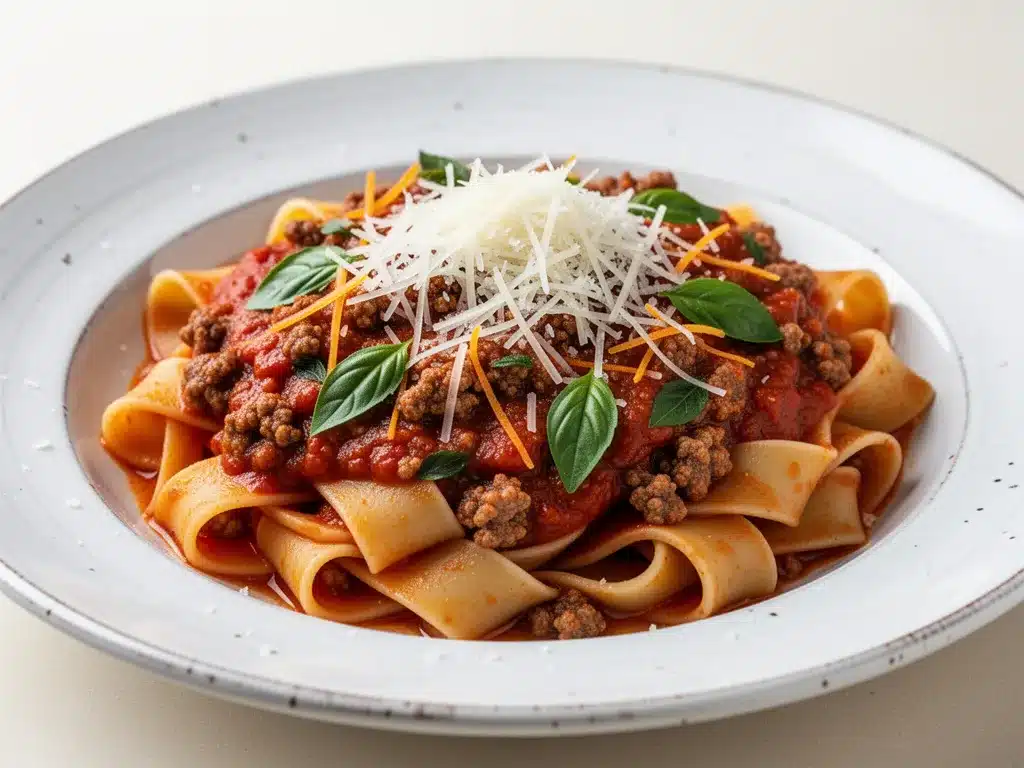
Ground Beef (1.5 pounds / 680g) — Use 80/20 or 85/15 fat ratio. You need some fat for flavor. If you use lean beef, the sauce will be dry and bland. I buy it from a local butcher if possible, but any good supermarket brand works.
Whole Peel San Marzano Tomatoes (28-ounce can / 794g) — This is the star. Look for the DOP stamp on the can. Crush them by hand or with a food processor—don’t blend them into a puree. You want some texture.
Tomato Paste (2 tablespoons) — This adds intensity and body. It’s not just about tomato flavor; it’s about umami. Cook it with the veggies first to caramelize it slightly.
Beef Broth (1 cup / 240ml) — Use low-sodium so you can control the saltiness. Homemade is best, but a good quality store-bought one works fine.
For the Finish
Heavy Cream (2 tablespoons / 30ml) — This is the secret Italian touch. It doesn’t make it creamy like Alfredo; it cuts the acidity of the tomatoes and makes the sauce silky. It’s traditional in many Northern Italian ragùs.
Fresh Basil (10-12 leaves, torn) — Add this at the very end. It provides a fresh, aromatic lift that contrasts with the heavy, cooked flavors.
Salt and Black Pepper — To taste. Use kosher salt or sea salt. Freshly cracked black pepper is essential.
Red Wine (½ cup / 120ml) — A dry red like Chianti or Sangiovese. Don’t use your cooking wine; use something you’d actually drink. The alcohol cooks off, leaving behind complex tannins.
Equipment Needed
You don’t need a fancy kitchen to make this. I keep it simple so you can focus on the food. Here’s what I actually use.
Heavy-Bottomed Dutch Oven or Large Skillet — I use a 6-quart Dutch oven. The heavy bottom is crucial for even heat distribution. It prevents hot spots that can burn the onions or stick the sauce. A large, heavy skillet works too if you prefer.
Wooden Spoon — For stirring. It doesn’t scratch the pot and it’s great for scraping the bottom. Silicone works too, but wood feels more traditional.
Food Processor or Blender — Optional. I like to pulse my San Marzano tomatoes in a food processor for 10 seconds to get a chunky but consistent texture. If you prefer a smoother sauce, blend longer. For a rustic sauce, crush them by hand.
Microplane or Fine Grater — For the carrots and celery. If you don’t have a food processor, you can grate these veggies finely. It helps them melt into the sauce.
Measuring Cups and Spoons — Standard stuff. Accuracy matters a little more here than in baking, but you don’t need to be obsessive.
How to Make It: Step-by-Step
Alright, let’s get cooking. This process is straightforward, but it requires patience. I’m walking you through exactly how I do it, including the little tricks that make the difference between good and great.
Step 1: Prep Your Sofritto (10 minutes)
Start by finely dicing your onion, carrots, and celery. The goal is to have them all roughly the same size so they cook evenly. Mince your garlic. Have your crushed tomatoes and broth ready to go. Once you start cooking, things move fast, so prep first.
Step 2: Sweat the Vegetables (10-15 minutes)
Heat the olive oil in your Dutch oven over medium-low heat. Add the onions, carrots, and celery. Cook slowly for 10-15 minutes, stirring occasionally. You want them to soften and become translucent, not brown. This slow sweating draws out their natural sweetness. Add the garlic and tomato paste in the last 2 minutes, stirring constantly so the paste doesn’t burn. It should smell sweet and rich.
Step 3: Brown the Beef (5-7 minutes)
Turn the heat up to medium. Add the ground beef. Break it up with your wooden spoon as it cooks. You want to cook it until it’s no longer pink, but not until it’s dry or crumbly. You want some texture. This should take about 5-7 minutes. If there’s excessive fat, you can drain some, but leave a little for flavor.
Step 4: Deglaze with Wine (3 minutes)
Pour in the red wine. Scrape the bottom of the pot with your spoon to release any browned bits (fond)—that’s where all the flavor is. Let the wine simmer vigorously for 2-3 minutes until the alcohol smell has mostly cooked off and the liquid has reduced by half.
Step 5: Simmer the Sauce (1.5-2 hours)
Add the crushed San Marzano tomatoes and the beef broth. Stir well. Bring the sauce to a gentle bubble, then immediately reduce the heat to low. Cover the pot partially (leave a small gap for steam to escape). Let it simmer gently for 1.5 to 2 hours. Stir every 20-30 minutes to prevent sticking. The sauce should reduce and thicken, and the oil should start to separate slightly on top. This is a sign it’s ready.
Step 6: Finish and Rest (5 minutes)
Remove the pot from the heat. Stir in the heavy cream. This will stop the cooking process and add silkiness. Taste the sauce. Add salt and pepper as needed. Stir in the torn fresh basil. Let it sit for 10 minutes before serving. This resting period allows the flavors to meld and the sauce to settle.
Expert Tips & Tricks
Here’s everything I’ve learned from making this dozens of times. These tips will save you from my early mistakes.
Don’t Rush the Sofritto — This is the most common mistake. People turn the heat up too high and burn the onions. Low and slow is the key. If the onions brown too quickly, you’ll get a bitter taste. Be patient.
Use the Right Tomatoes — I cannot stress this enough. San Marzano tomatoes are worth the extra cost. They are sweeter, less acidic, and have fewer seeds. If you can’t find them, use high-quality whole peeled tomatoes, but avoid “diced” tomatoes in a can—they often have added citric acid and preservatives.
Let It Rest — I know you want to eat it immediately. But letting the sauce rest for 10-15 minutes after cooking makes a huge difference. The flavors stabilize and deepen. If you have time, make it the day before and reheat it.
Adjust the Consistency — If the sauce is too thick, add a splash of water or broth. If it’s too thin, simmer it uncovered for a few more minutes. The sauce should coat the back of a spoon, not run off like water.
Pair with the Right Pasta — This sauce is heavy, so you need pasta with ridges or shapes that can hold the sauce. Tagliatelle, pappardelle, or rigatoni are ideal. Spaghetti works, but it’s not traditional. Avoid delicate pasta like angel hair.
Variations & Substitutions
Once you’ve mastered the basic version, here’s how you can mix it up. I’ve tried all of these.
Half Beef, Half Pork — Traditionally, Bolognese uses a mix of beef and pork. Try using ¾ pound beef and ¾ pound ground pork for a richer, more complex flavor. The pork adds a subtle sweetness.
Vegetarian Version — Swap the beef for finely chopped mushrooms and walnuts. Sauté them until dry and browned, then proceed with the recipe. It’s surprisingly satisfying.
Spicy Version — Add 1 teaspoon of red pepper flakes or a pinch of Calabrian chili paste when you add the garlic. It adds a nice kick that cuts through the richness.
Wine Substitution — If you don’t drink wine, you can use extra beef broth plus a splash of red wine vinegar or balsamic vinegar to mimic the acidity. It’s not the same, but it works.
Dairy-Free — Skip the heavy cream. The sauce will be less silky, but still delicious. You can add a tablespoon of olive oil at the end for richness.
Serving & Storage
How to enjoy this masterpiece.
How to Serve: I usually serve this straight from the skillet at the dinner table—it looks rustic and stays warm. Top with freshly grated Parmigiano-Reggiano and a crack of black pepper. A side of crusty bread is mandatory for soaking up the sauce.
Refrigerator: Store in an airtight container for up to 4 days. The sauce will thicken in the fridge—totally normal.
Reheating: Best method: Add to a skillet with a splash of milk or broth over low heat. Stir until heated through and creamy again. Microwave method: Heat in 30-second intervals, stirring between. Add a splash of liquid if it’s too thick.
Freezing: This freezes beautifully. Let it cool completely, then transfer to freezer-safe bags or containers. It will keep for up to 3 months. Thaw in the fridge overnight before reheating.
Nutrition Information
I’m not a nutritionist, but here’s the breakdown if you’re tracking.
Per Serving (based on 6 servings):
| Nutrient | Amount |
|---|---|
| Calories | 380 |
| Protein | 25g |
| Carbs | 18g |
| Fat | 22g |
| Fiber | 4g |
Look, this is comfort food with beef and cream. It’s not a diet recipe. But it’s way better than takeout, costs less, and I know exactly what’s in it. When I want to make it lighter, I use leaner beef and skip the cream. But usually? I just eat a reasonable portion and enjoy it.
Final Thoughts
So that’s my go-to Authentic Italian Beef Bolognese with San Marzano Tomatoes! I’ve probably talked your ear off at this point, but when you make a recipe this often, you have a lot to say about it.
This has saved weeknight dinners more times than I can count. It’s my answer to “what’s for dinner” when I’m tired, don’t want takeout, and still want something that tastes really good. My kids are happy, my husband’s happy, and I’m happy because I’m not stressed about cooking.
Make it yours! Try different add-ins, swap in your favorite vegetables, adjust the garlic (though more is always better in my opinion). The best recipes are the ones you adapt to your family’s tastes.
If you make this, drop a comment and let me know what you think! I love hearing how recipes turn out in your kitchen. And if something doesn’t work, tell me that too—I’m here to help troubleshoot.
Happy cooking! And I hope your kitchen smells half as good as mine does right now.
Frequently Asked Questions
Can I use regular canned tomatoes instead of San Marzano?
You can, but the flavor won’t be the same. San Marzano tomatoes are sweeter and less acidic. If you must use regular tomatoes, add a pinch of sugar to balance the acidity. But really, try to find San Marzanos—they make a huge difference.
Why did my sauce turn out watery?
Usually, this means you didn’t simmer it long enough. The sauce needs time to reduce and thicken. Let it simmer uncovered for an extra 30 minutes. Also, make sure you’re not adding too much broth at the beginning.
Can I make this ahead for a dinner party?
Absolutely. In fact, it’s better made ahead. Make the sauce up to 2 days ahead and store in the fridge. Cook the pasta fresh right before serving. Reheat the sauce gently and toss with hot pasta. It saves you stress during the party.
Why did my sauce get grainy?
This usually happens if the heat was too high when you added the cheese or cream. Always add dairy off the heat or on very low heat. If it’s already grainy, try whisking in a splash of warm water or broth to smooth it out.
Can I use jarred garlic?
You can, but fresh tastes so much better. Jarred garlic has a metallic taste that really shows up in this sauce. If you must use it, use half the amount because it’s stronger. But honestly, mincing 6 cloves takes like 2 minutes.
How do I reheat leftovers without it getting dry?
Add a splash of milk or broth to a skillet, add your leftover pasta, and heat gently over low heat, stirring frequently. The extra liquid brings back the creamy texture. Microwave sort of works but tends to dry it out.
Can I double this recipe?
Yes! Double everything and use your biggest pot. The cooking times stay roughly the same, but you may need to stir more frequently to prevent sticking. I do this when I’m meal-prepping or feeding a crowd.
Pin This Recipe!
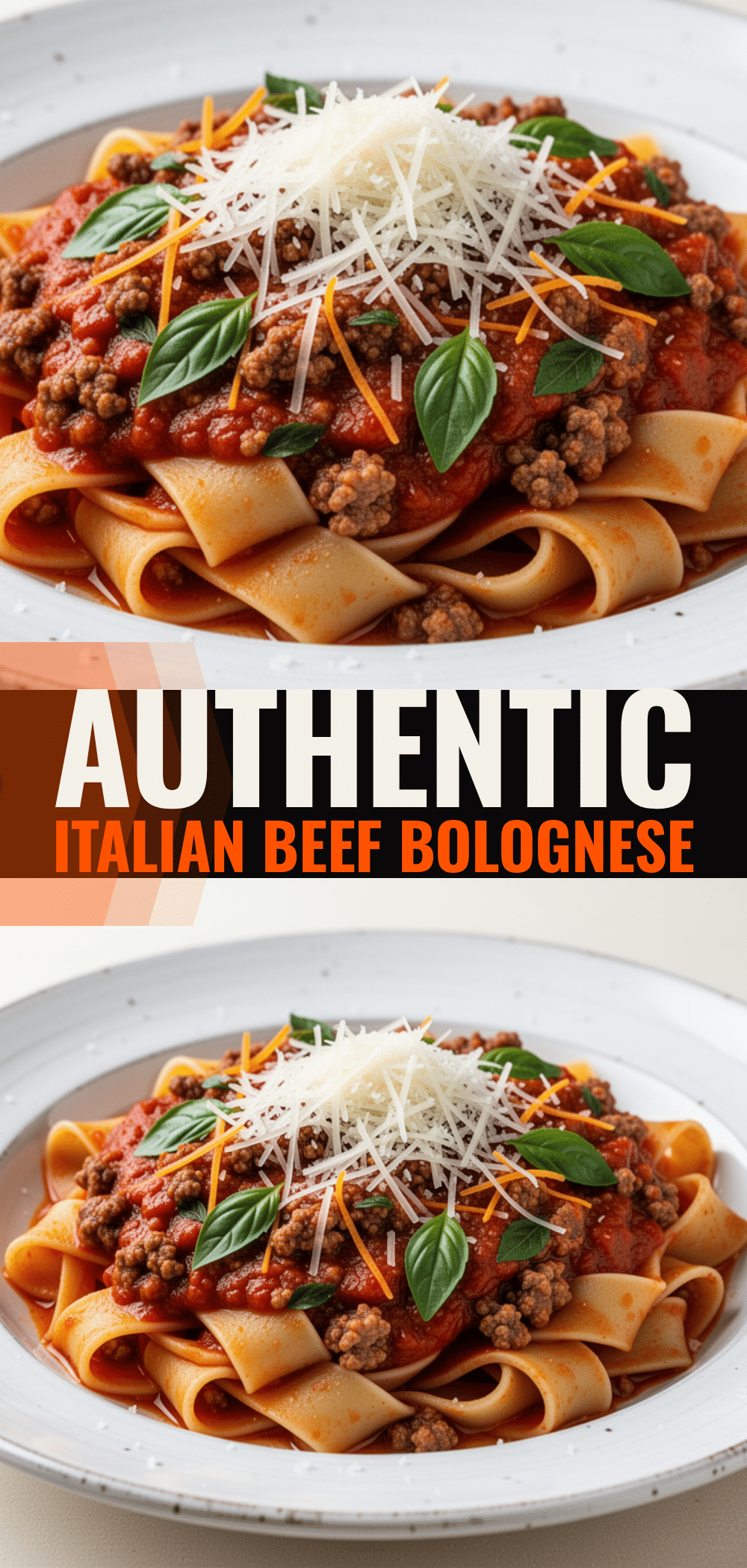
Authentic Italian Beef Bolognese with San Marzano Tomatoes
- Total Time: 1 hour 55 minutes
- Yield: 6 servings 1x
Description
A rich, deeply flavorful authentic Italian beef Bolognese sauce made with San Marzano tomatoes, slow-simmered to perfection for a velvety texture that clings to pasta.
Ingredients
- 3 tablespoons extra virgin olive oil
- 1 large yellow onion, finely diced
- 2 medium carrots, finely diced
- 2 stalks celery, finely diced
- 4 cloves garlic, minced
- 1.5 pounds ground beef (80/20 or 85/15 fat ratio)
- 28-ounce can whole peel San Marzano tomatoes
- 2 tablespoons tomato paste
- 1 cup beef broth (low-sodium)
- 1/2 cup dry red wine (such as Chianti or Sangiovese)
- 2 tablespoons heavy cream
- 10–12 fresh basil leaves, torn
- Salt and black pepper to taste
Instructions
- Finely dice the onion, carrots, and celery, and mince the garlic. Prepare the crushed tomatoes and broth.
- Heat olive oil in a heavy-bottomed Dutch oven over medium-low heat. Add onions, carrots, and celery. Sweat slowly for 10-15 minutes until soft and translucent, not brown.
- Add garlic and tomato paste in the last 2 minutes, stirring constantly to prevent burning.
- Increase heat to medium. Add ground beef and break it up with a wooden spoon. Cook for 5-7 minutes until no longer pink.
- Pour in red wine and scrape the bottom of the pot to release browned bits. Simmer for 2-3 minutes until reduced by half.
- Add crushed San Marzano tomatoes and beef broth. Stir well and bring to a gentle bubble.
- Reduce heat to low, cover partially, and simmer gently for 1.5 to 2 hours, stirring every 20-30 minutes, until thickened.
- Remove from heat. Stir in heavy cream, salt, pepper, and fresh basil. Let rest for 10 minutes before serving.
Notes
Use high-quality San Marzano tomatoes for the best flavor. The sauce tastes better the next day as flavors meld. If the sauce is too thick, add a splash of water or broth. If too thin, simmer uncovered longer. Pair with tagliatelle, pappardelle, or rigatoni.
- Prep Time: 10 minutes
- Cook Time: 1 hour 45 minutes
- Category: Main Course
- Cuisine: Italian
Nutrition
- Serving Size: 1 serving (approx. 1
- Calories: 380
- Sugar: 10
- Sodium: 450
- Fat: 22
- Saturated Fat: 8
- Carbohydrates: 18
- Fiber: 4
- Protein: 25
Keywords: Italian, Bolognese, Beef Sauce, San Marzano Tomatoes, Pasta Sauce, Slow Cooked, Comfort Food, Make-Ahead


