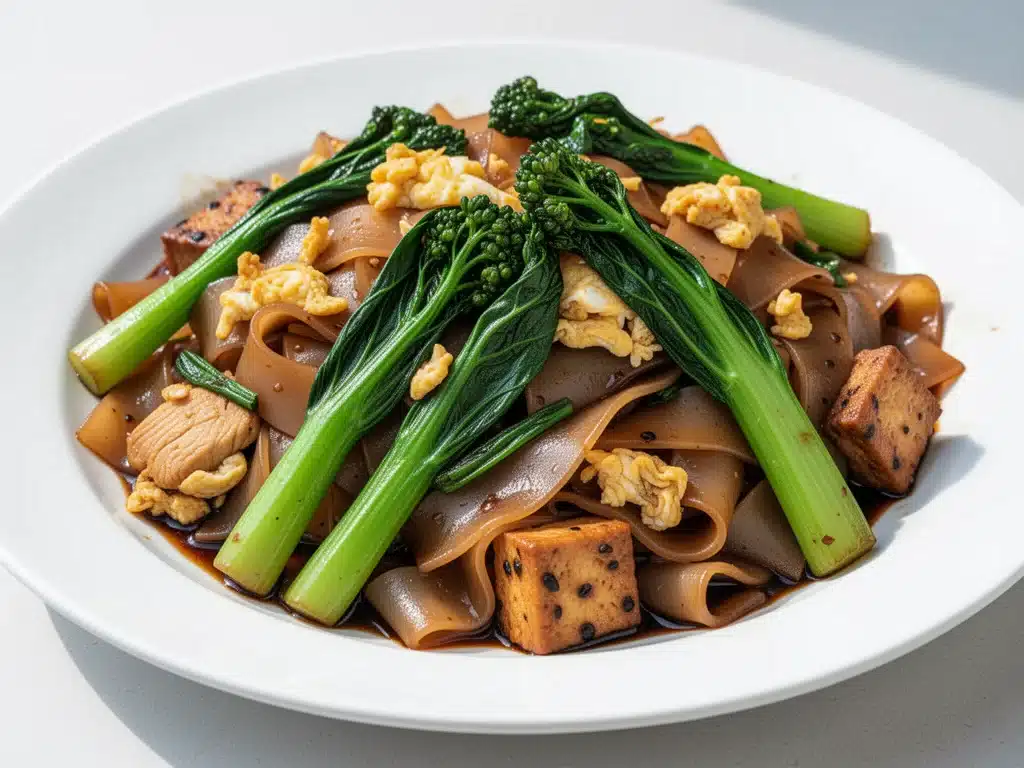
I still remember the first time I had pad see ew in a cramped, plastic-chair restaurant in Chinatown. It was raining, I was soaked, and my stomach was growling loud enough to drown out the traffic. The waiter slid a steaming plate in front of me, and I took one bite that stopped time. The noodles were charred and slightly crispy at the edges, slick with a dark, savory-sweet sauce, studded with tender Chinese broccoli and chewy chicken. It wasn’t just food; it was a warm hug after a cold day.
For years, I tried to recreate that magic at home. My early attempts were disasters. The noodles stuck together in a clumpy mess. The sauce tasted like plain soy sauce. The “wok hei”—that smoky breath of the wok—was missing entirely. I felt like I was cooking a completely different dish. But then I figured out the secret: it’s not about fancy ingredients, it’s about the ratio of sauces and high heat.
This authentic Thai pad see ew recipe with Chinese broccoli is the one that finally worked. I’ve tested it over twenty times, tweaking the sauce balance and the cooking technique until it was perfect. It’s the kind of stir-fry that tastes like it came from a busy street vendor but comes together in your own kitchen in under 20 minutes. It’s sweet, salty, smoky, and deeply satisfying. If you’ve ever ordered takeout and wished it tasted more authentic, this is the recipe for you. It’s simple, it’s fast, and it’s genuinely delicious.
Why You’ll Love This Recipe
There are a lot of stir-fry recipes out there, but this pad see ew stands out for reasons that have nothing to do with being “healthy” and everything to do with being incredibly satisfying. Here’s why this version has earned a permanent spot in my weekly rotation:
- Wok Hei in a Home Kitchen — You can’t get that smoky char without a professional wok, but I’ve cracked the code. By using a high-smoke-point oil and cooking in batches, you actually get that signature burnt edge that makes stir-fry addictive. It’s the closest you’ll get to restaurant quality at home.
- Pantry-Friendly Sauce — You don’t need to hunt down obscure Asian grocers for the base. The sauce is just a mix of dark soy sauce, light soy sauce, oyster sauce, and a touch of sugar. If you have these, you’re already halfway to dinner.
- Chinese Broccoli Changes Everything — Most people use regular broccoli or bok choy. But Chinese broccoli (gai lan) has thick, slightly sweet stems and bitter greens that hold up to high heat. It adds a texture and flavor complexity that regular broccoli just can’t match. It’s the game-changer.
- 20 Minutes Flat — This isn’t a slow-cooked meal. It’s a quick, high-energy cook. From chopping to plating, it takes less time than it takes to wait for a delivery driver. Perfect for those nights when you’re tired but don’t want to eat cereal.
- Customizable Protein — I usually use chicken, but this recipe works just as well with shrimp, pork, or tofu. It’s a blank canvas for whatever protein you have on hand.
This is my go-to when I want something that feels special but doesn’t require special effort. It’s reliable, it’s flavorful, and it always makes people ask for the recipe.
Ingredients You’ll Need
The beauty of pad see ew is that the ingredient list is short, but the quality matters. Here’s what you need to get that authentic taste and texture.
For the Noodles
Rice Noodles (Sen Mai) (8 ounces / 225g) — You need wide, flat rice noodles, about 1 inch wide. Look for them in the Asian aisle, usually labeled “wide rice noodles” or “sen mai.” Do not use vermicelli (thin noodles) or udon (wheat noodles). If you can’t find fresh, dried works fine, but you must soak them properly. I prefer the fresh ones if they’re available—they cook faster and have a better texture.
For the Sauce
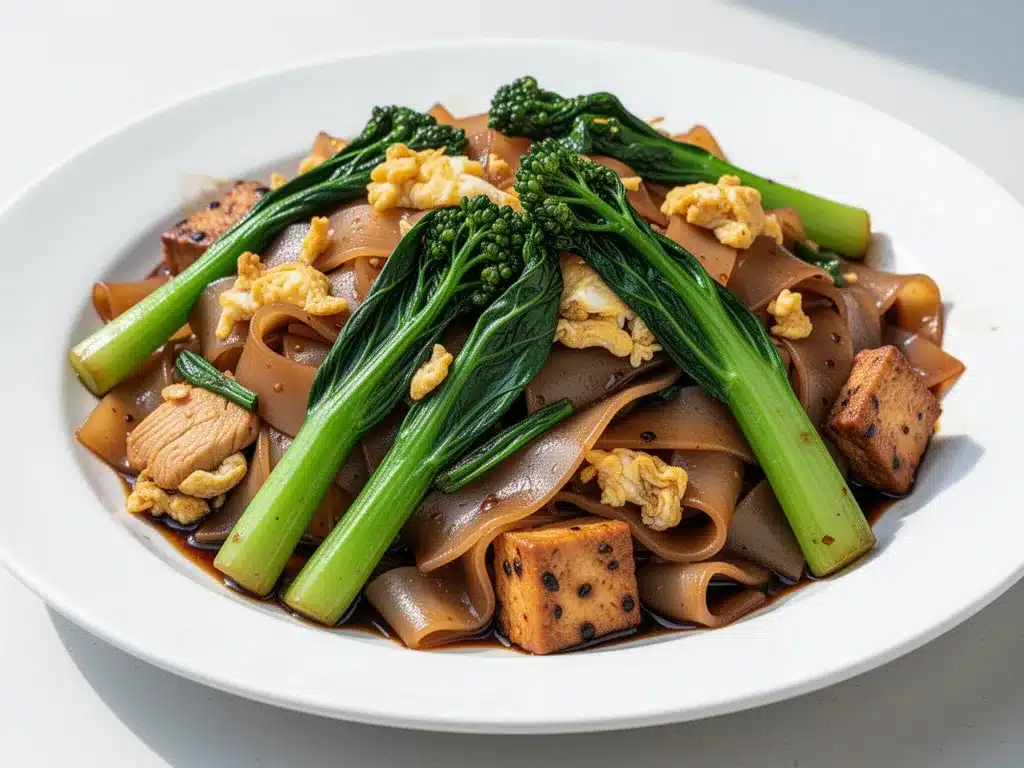
Dark Soy Sauce (3 tablespoons) — This is the key ingredient. It’s thicker, less salty, and sweeter than regular soy sauce. It gives the noodles their deep black color and rich flavor. If you can’t find it, you can sub regular soy sauce plus a teaspoon of molasses, but dark soy is best.
Light Soy Sauce (2 tablespoons) — This adds saltiness without the heavy color. It balances out the dark soy sauce. Don’t skip this, or the dish will taste one-dimensional.
Oyster Sauce (2 tablespoons) — This adds umami and a bit of sweetness. It’s essential for that savory depth. Make sure you use the thick, real oyster sauce, not the watery kind.
White Sugar (1 tablespoon) — Thai food is known for its sweet-salty balance. Sugar rounds out the harshness of the soy sauces. White sugar is standard, but brown sugar works if you want a deeper caramel note.
White Pepper (1/2 teaspoon) — Freshly ground is best. This adds a sharp, earthy heat that black pepper can’t replicate. It’s a subtle but important flavor note.
For the Stir-Fry
Chinese Broccoli (Gai Lan) (2 large bunches / about 400g) — This is the star vegetable. Look for bunches with thick, tender stems and dark green leaves. Cut the stems into 2-inch pieces and the leaves into larger chunks. The stems take longer to cook, so separate them from the leaves.
Chicken (1 pound / 450g, sliced thin) — I use boneless, skinless chicken thighs. They stay juicier than breasts when cooked at high heat. Slice them against the grain into thin strips. If you prefer pork or shrimp, that works too.
Eggs (2 large) — Scrambled eggs are traditional in pad see ew. They add richness and protein. I like to push them to the side of the wok and let them get a little crispy before mixing them in.
Garlic (4 cloves, minced) — Don’t skimp. Garlic is the aromatic base. Fresh is mandatory—jarred garlic tastes metallic and won’t give you that fresh punch.
Neutral Oil (3 tablespoons) — Use an oil with a high smoke point like canola, grapeseed, or peanut oil. Olive oil will burn and taste bitter at the high heat needed for stir-fry.
Vegetable Oil (for frying noodles) (1 tablespoon) — This is a trick to keep the noodles from sticking together before they hit the wok.
Optional Add-ins
Bean Sprouts (1/2 cup) — I like to add these at the very end for crunch. They’re not traditional in every version, but I love the texture contrast.
Cilantro (for garnish) — Fresh cilantro adds a bright, herbal finish that cuts through the richness of the sauce.
Equipment Needed
You don’t need a professional kitchen, but you do need the right tools. Here’s what I use:
Wok or Large Skillet — A carbon steel wok is ideal because it heats up fast and distributes heat evenly. But a large, heavy-bottomed skillet (12-inch) works too. The key is having enough surface area so the noodles don’t steam. If you crowd the pan, you lose the char.
Chopsticks or Tongs — Using chopsticks to toss the noodles gives you better control and prevents breaking them. Tongs work too, but chopsticks are traditional and effective.
Sharp Knife — You’ll be slicing chicken and chopping broccoli. A sharp knife makes this safe and quick. Dull knives slip and hurt.
Colander — For draining the soaked noodles. Make sure you shake it well to remove excess water. Wet noodles = steamed noodles, and we want fried noodles.
Small Bowl — For mixing the sauce. Having it ready before you start cooking is crucial because stir-frying moves fast.
How to Make It: Step-by-Step
Alright, let’s cook. This process is fast, so have everything prepped before you turn on the heat. Here’s exactly how I make it.
Step 1: Prep the Noodles (5 minutes)
If you’re using dried rice noodles, soak them in warm water for 30-45 minutes until they are soft and pliable but still have a bit of chew. They should be flexible, not mushy. If you’re using fresh noodles, you can skip the soaking, but rinse them in cold water to remove excess starch. Drain them well. Toss them with 1 tablespoon of neutral oil to prevent sticking. This oil coating helps them slide around in the wok later.
Step 2: Mix the Sauce (2 minutes)
In a small bowl, whisk together the dark soy sauce, light soy sauce, oyster sauce, sugar, and white pepper. Stir until the sugar is dissolved. Set this aside. It should look like dark coffee. Taste it—it should be sweet and salty. Adjust if needed.
Step 3: Prep the Vegetables and Protein (5 minutes)
Slice the chicken thighs into thin strips. Wash and trim the Chinese broccoli. Cut the thick stems into 2-inch lengths and chop the leaves into larger pieces. Keep the stems and leaves separate. Mince the garlic. Crack the eggs into a small bowl and whisk them with a pinch of salt.
Step 4: Scramble the Eggs (2 minutes)
Heat your wok or skillet over high heat until it’s smoking hot. Add 1 tablespoon of oil. Pour in the eggs and scramble them quickly with chopsticks or a spatula. Don’t cook them through completely—they should still be slightly runny. Remove them from the pan and set aside on a plate. This keeps them tender.
Step 5: Sear the Chicken (3 minutes)
Add another tablespoon of oil to the hot wok. Add the chicken in a single layer. Let it sear for 1-2 minutes without moving it. You want brown edges. Then stir-fry for another minute until cooked through. Remove the chicken from the pan and set it aside with the eggs.
Step 6: Stir-Fry the Broccoli (2 minutes)
Add the last tablespoon of oil to the wok. Add the garlic and stir-fry for 10 seconds until fragrant. Add the Chinese broccoli stems first, since they take longer to cook. Stir-fry for 1 minute, then add the leaves. Cook for another minute until the greens are wilted but still bright green and the stems are tender-crisp. Push everything to the side of the wok.
Step 7: Combine and Sauce (3 minutes)
Turn the heat to high. Add the noodles to the center of the wok. Pour the sauce mixture over the noodles. Use your chopsticks or tongs to toss the noodles, lifting them from the bottom and turning them over. The goal is to coat every strand evenly. The noodles will darken quickly as they absorb the sauce. Add the chicken and eggs back to the pan. Toss everything together for another minute. The noodles should be glossy, dark, and slightly charred at the edges.
Step 8: Serve Immediately
Remove from heat. If you’re adding bean sprouts, toss them in now. Serve immediately while hot. Garnish with fresh cilantro if you like. The longer you wait, the more the noodles will stick together.
Expert Tips & Tricks
Here’s everything I’ve learned from making this dozens of times. These tips will save you from my mistakes.
Don’t Overcrowd the Pan — This is the #1 mistake. If you put too much in the pan at once, the temperature drops, and the food steams instead of frying. If you’re cooking for more than two people, cook in batches. It’s worth the extra effort.
High Heat is Non-Negotiable — Pad see ew is a high-heat dish. Your wok needs to be smoking hot before you add ingredients. If you’re cooking on low heat, you’ll get soggy noodles. Crank up the burner.
Soak, Don’t Boil, the Noodles — Boiling rice noodles makes them mushy. Soaking them in warm water rehydrates them gently, keeping them chewy. They’ll finish cooking in the wok, so they don’t need to be fully soft before you start.
Use Dark Soy Sauce — I can’t stress this enough. Light soy sauce alone makes the dish look pale and taste flat. Dark soy sauce gives it that deep, restaurant-quality color and richness. It’s not optional if you want it to taste authentic.
Keep It Moving — Stir-frying is fast. Have your sauce mixed and ingredients prepped before you turn on the heat. Once you start cooking, you don’t have time to chop or measure.
Common Mistakes to Avoid:
- Mistake: Noodles are sticking together. Fix: Make sure you’re tossing them with oil after soaking, and don’t let them sit in the pan too long without moving them.
- Mistake: Sauce is too salty. Fix: Dark soy sauce is salty. Taste your sauce before adding it. If it’s too salty, add a pinch of sugar or a splash of water to balance it.
- Mistake: Broccoli is raw. Fix: Chinese broccoli stems are thick. Make sure they’re cut evenly and cooked long enough. They should be tender-crisp, not crunchy.
Variations & Substitutions
Once you’ve nailed the basic version, here’s how you can mix it up. I’ve tried all of these.
Shrimp Pad See Ew — Swap the chicken for large shrimp. Shrimp cooks faster, so add it in the last minute of the stir-fry. It’s lighter and sweeter.
Pork Pad See Ew — Thinly sliced pork belly or pork loin works great. Pork belly adds extra fat and flavor, which is delicious.
Tofu Pad See Ew (Vegetarian) — Use firm tofu, pressed and cubed. Fry the tofu first until crispy, then remove and add it back at the end. Use vegetarian oyster sauce (made from mushrooms) instead of regular oyster sauce.
With Bok Choy — If you can’t find Chinese broccoli, baby bok choy is a decent substitute. Cut it into large chunks. It’s softer, so add it later in the cooking process.
Spicy Version — Add a teaspoon of chili garlic sauce or fresh sliced chilies when you add the garlic. It adds a nice kick.
Gluten-Free — Use tamari instead of soy sauce, and make sure your oyster sauce is gluten-free (some brands contain wheat). Rice noodles are naturally gluten-free.
Serving & Storage
How to Serve: I usually serve this straight from the wok. It looks rustic and stays warm. Pair it with a simple cucumber salad or a light soup to balance the richness. A wedge of lime on the side is a nice touch—squeeze a little over the top for brightness.
Storage: Store leftovers in an airtight container in the fridge for up to 3 days. The noodles will absorb the sauce and get softer, which some people love.
Reheating: Reheat in a skillet over medium heat with a splash of water to loosen the noodles. The microwave works too, but add a splash of water and cover it to steam them slightly. Don’t microwave them dry—they’ll turn into a brick.
Freezing: I don’t recommend freezing pad see ew. The noodles get mushy and unpleasant when thawed. It’s best eaten fresh.
Nutrition Information
I’m not a nutritionist, but here’s the breakdown if you’re tracking. This is per serving (based on 4 servings).
| Nutrient | Amount |
|---|---|
| Calories | 450 |
| Protein | 25g |
| Carbs | 55g |
| Fiber | 3g |
| Fat | 15g |
| Sodium | 900mg |
What’s Good: Decent protein from chicken and eggs. The Chinese broccoli adds fiber and vitamins A and C.
What to Know: Higher in sodium due to the soy sauces. Use low-sodium soy sauce if you’re watching salt. The carbs are from rice noodles, which are gluten-free but still high in carbs.
Final Thoughts
So that’s my authentic Thai pad see ew recipe. I know I’ve talked a lot about the sauce and the heat, but that’s because those are the keys to getting it right. Once you master those two things, you’ll never order takeout again.
This dish has saved me on busy weeknights, fed my family when we were craving comfort food, and impressed guests who thought I was ordering from a Thai restaurant. It’s simple, but it’s not basic. It’s complex in flavor and texture, and it’s deeply satisfying.
Make it your own! Try different proteins, add extra veggies, or adjust the spice level. The best recipes are the ones you adapt to your tastes. If you make this, drop a comment and let me know how it turned out. I love hearing from you. And if something doesn’t work, tell me—I’m here to help.
Happy cooking! I hope your kitchen smells as good as mine does right now.
Frequently Asked Questions
Can I use regular broccoli instead of Chinese broccoli?
You can, but the texture and flavor will be different. Regular broccoli is softer and sweeter, while Chinese broccoli (gai lan) has thicker, crunchier stems and slightly bitter leaves. If you use regular broccoli, chop it into smaller florets and add it later in the cooking process so it doesn’t get mushy. Gai lan is worth seeking out for the authentic experience.
Why are my rice noodles sticking together?
This usually happens if the noodles aren’t drained well enough after soaking, or if they aren’t tossed with oil before cooking. Make sure you shake the colander vigorously to remove excess water. Also, tossing them with a little oil before they hit the wok helps keep them separate. Don’t let them sit in a pile for too long before cooking.
What is dark soy sauce, and can I substitute it?
Dark soy sauce is thicker, sweeter, and less salty than regular soy sauce. It’s used primarily for color and a rich, molasses-like flavor. If you can’t find it, you can mix regular soy sauce with a teaspoon of molasses or brown sugar. But it won’t be exactly the same. Dark soy is the key to that deep black color.
Can I make this ahead of time?
I don’t recommend making the whole dish ahead. Rice noodles absorb sauce quickly and get soft. You can prep the ingredients (slice chicken, chop veggies, mix sauce) ahead of time, but cook it fresh when you’re ready to eat. It comes together so fast that prepping ahead is the best compromise.
Is pad see ew spicy?
Traditionally, no. It’s savory, sweet, and salty. The heat comes from white pepper, which is mild and earthy. If you like spice, add chili flakes, fresh chilies, or a spoonful of chili garlic sauce when you stir-fry. But the base recipe is not spicy.
Can I use udon noodles instead of rice noodles?
You can, but it’s a different dish. Udon is wheat-based and has a chewier, breadier texture. Pad see ew is specifically made with rice noodles. If you use udon, you’re making a Japanese-style stir-fry, which is still delicious, but it’s not authentic pad see ew.
Pin This Recipe!
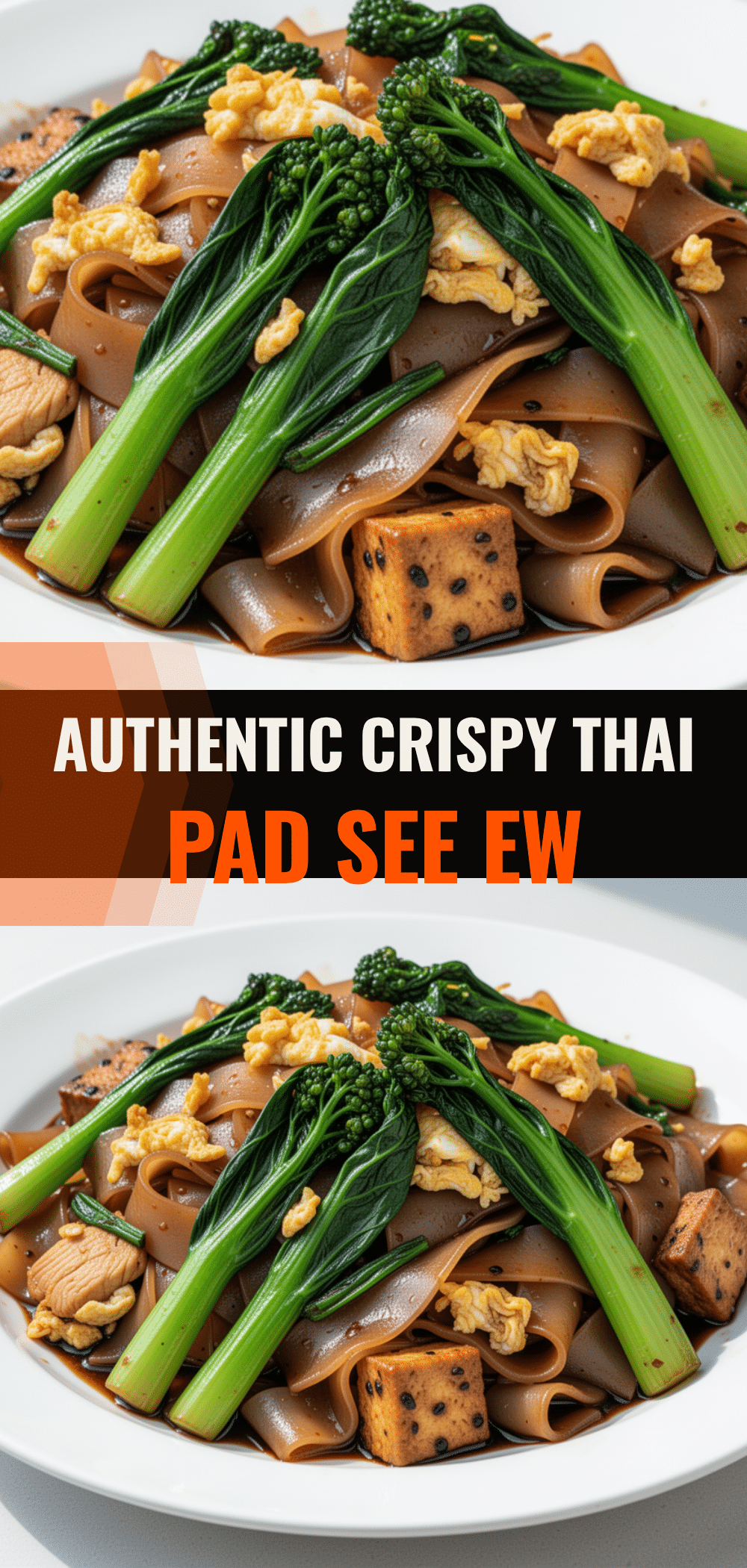
Authentic Thai Pad See Ew: Easy 20-Minute Dinner
- Total Time: 20 minutes
- Yield: 4 servings 1x
Description
A quick and authentic Thai stir-fry featuring wide rice noodles, chicken, Chinese broccoli, and eggs in a savory-sweet dark soy sauce. This recipe captures the smoky ‘wok hei’ flavor in under 20 minutes.
Ingredients
- 8 ounces (225g) wide flat rice noodles (sen mai)
- 3 tablespoons dark soy sauce
- 2 tablespoons light soy sauce
- 2 tablespoons oyster sauce
- 1 tablespoon white sugar
- 1/2 teaspoon white pepper
- 2 large bunches Chinese broccoli (gai lan), approx 400g
- 1 pound (450g) boneless, skinless chicken thighs, sliced thin
- 2 large eggs
- 4 cloves garlic, minced
- 3 tablespoons neutral oil (canola, grapeseed, or peanut)
- 1 tablespoon vegetable oil (for coating noodles)
- 1/2 cup bean sprouts (optional)
- Fresh cilantro for garnish (optional)
Instructions
- Soak dried rice noodles in warm water for 30-45 minutes until soft but chewy, or rinse fresh noodles in cold water. Drain well and toss with 1 tablespoon of neutral oil to prevent sticking.
- In a small bowl, whisk together dark soy sauce, light soy sauce, oyster sauce, sugar, and white pepper until the sugar is dissolved. Set aside.
- Slice chicken thighs into thin strips. Wash and trim Chinese broccoli, cutting stems into 2-inch pieces and leaves into larger chunks. Keep stems and leaves separate. Mince garlic and whisk eggs with a pinch of salt.
- Heat a wok or large skillet over high heat until smoking hot. Add 1 tablespoon oil, pour in eggs, and scramble quickly until slightly runny. Remove eggs and set aside.
- Add another tablespoon of oil to the hot wok. Sear chicken in a single layer for 1-2 minutes until browned, then stir-fry for 1 minute until cooked. Remove chicken and set aside with eggs.
- Add the last tablespoon of oil to the wok. Stir-fry garlic for 10 seconds, then add broccoli stems. Cook for 1 minute, add leaves, and cook for another minute until wilted but tender-crisp. Push vegetables to the side.
- Turn heat to high. Add noodles to the center and pour sauce over them. Toss vigorously to coat noodles evenly. Add chicken and eggs back to the pan. Toss for another minute until noodles are glossy and slightly charred.
- Remove from heat. Toss in bean sprouts if using. Serve immediately, garnished with fresh cilantro.
Notes
Do not overcrowd the pan to ensure high heat and proper charring. Soak noodles rather than boiling them to maintain texture. Use dark soy sauce for authentic color and flavor. If cooking for more than two people, cook in batches. Do not freeze leftovers as noodles become mushy.
- Prep Time: 12 minutes
- Cook Time: 8 minutes
- Category: Main Course
- Cuisine: Thai
Nutrition
- Serving Size: 1 plate per person
- Calories: 450
- Sugar: 12
- Sodium: 900
- Fat: 15
- Saturated Fat: 4
- Carbohydrates: 55
- Fiber: 3
- Protein: 25
Keywords: Thai food, pad see ew, stir fry, rice noodles, chicken stir fry, quick dinner, wok hei, Chinese broccoli, gai lan, authentic Thai recipe


